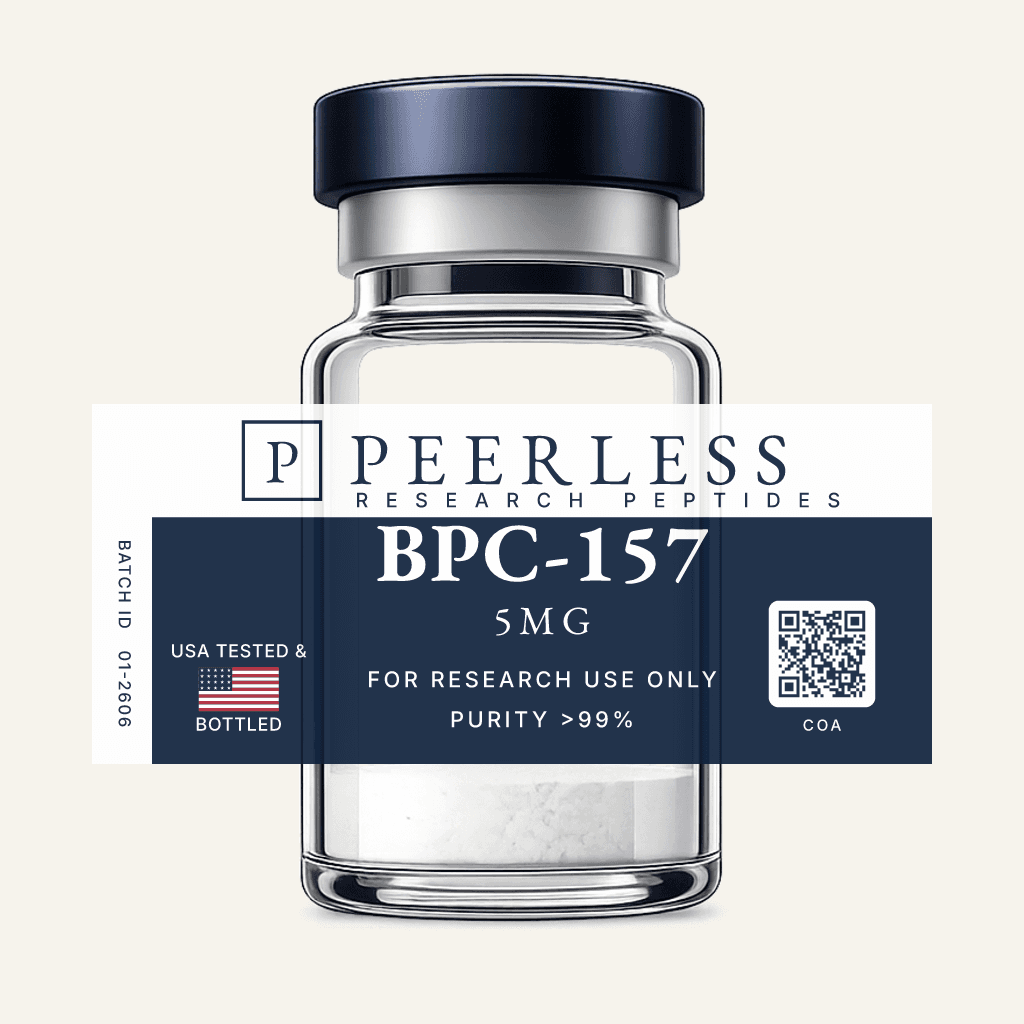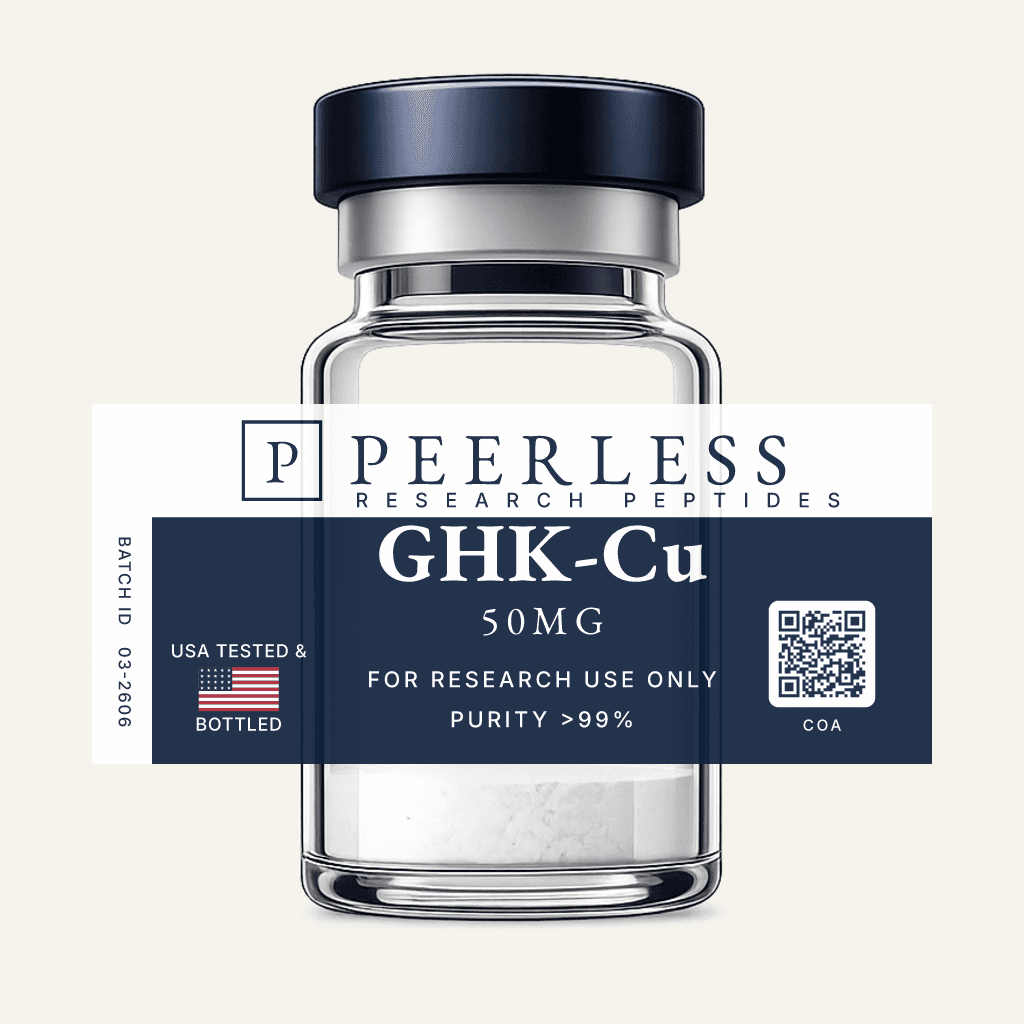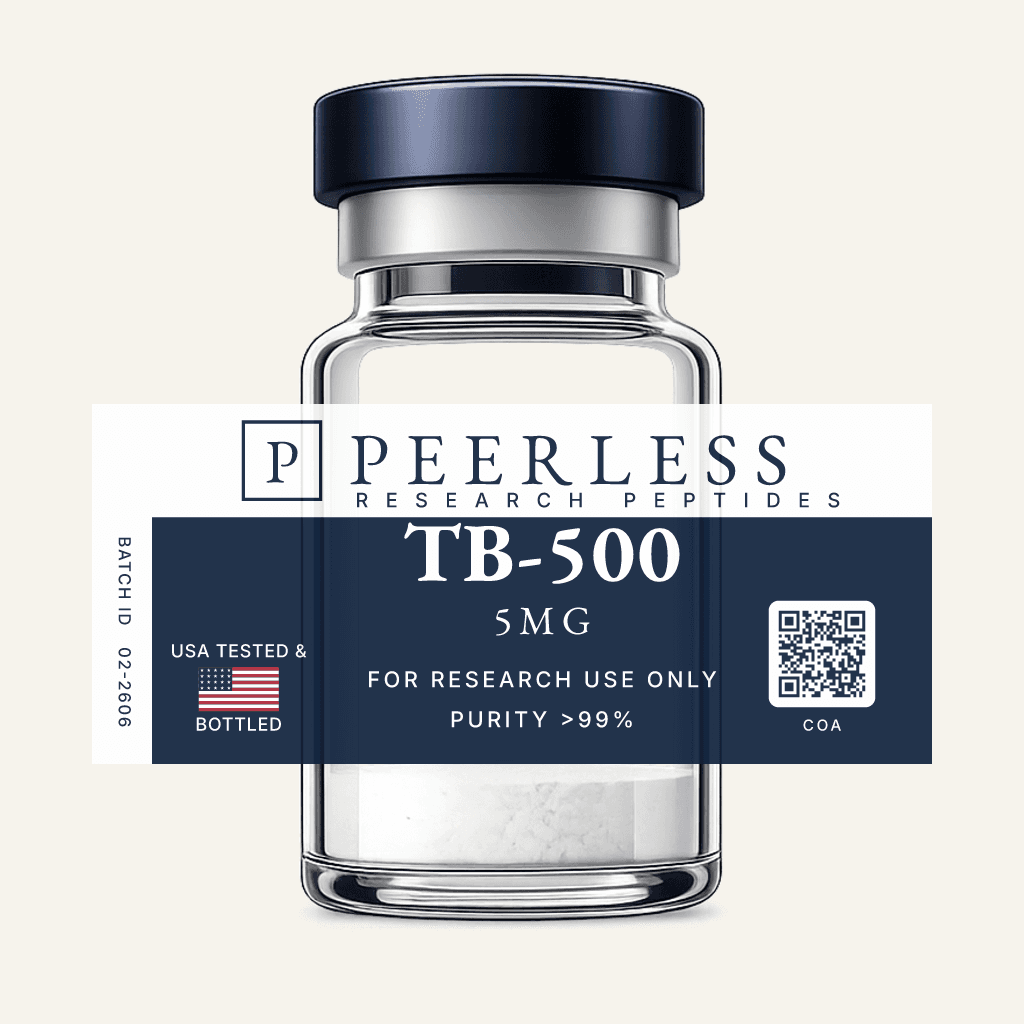
Quality Standards
American Owned
Mixed, bottled, and tested in the USA
Third-Party Tested
Independently tested for purity and quality
>99% Purity
Exceptional purity you can trust
Also Screened For
Endotoxins + Heavy Metals
Beyond the identity, purity & sterility panel.
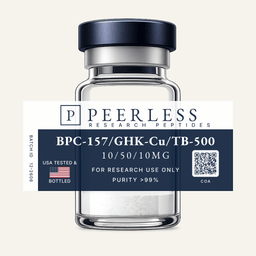
BPC-157 + GHK-Cu + TB-500 Blend
Contents: BPC-157 (10mg) · GHK-Cu (50mg) · TB-500 (10mg)
Tri-peptide research preparation more info
Available for laboratory research use only.
Quality Standards
American Owned
Mixed, bottled, and tested in the USA
Third-Party Tested
Independently tested for purity and quality
>99% Purity
Exceptional purity you can trust
Also Screened For
Endotoxins + Heavy Metals
Beyond the identity, purity & sterility panel.
Vial size
Choose your supply
3 vials· 30mg-50mg-10mg total
Save $21.75 (5% off)
Total
$413.25
Volume pricing applies to your total vials, not just this product. Mix or match any vials in your cart to reach the next tier.
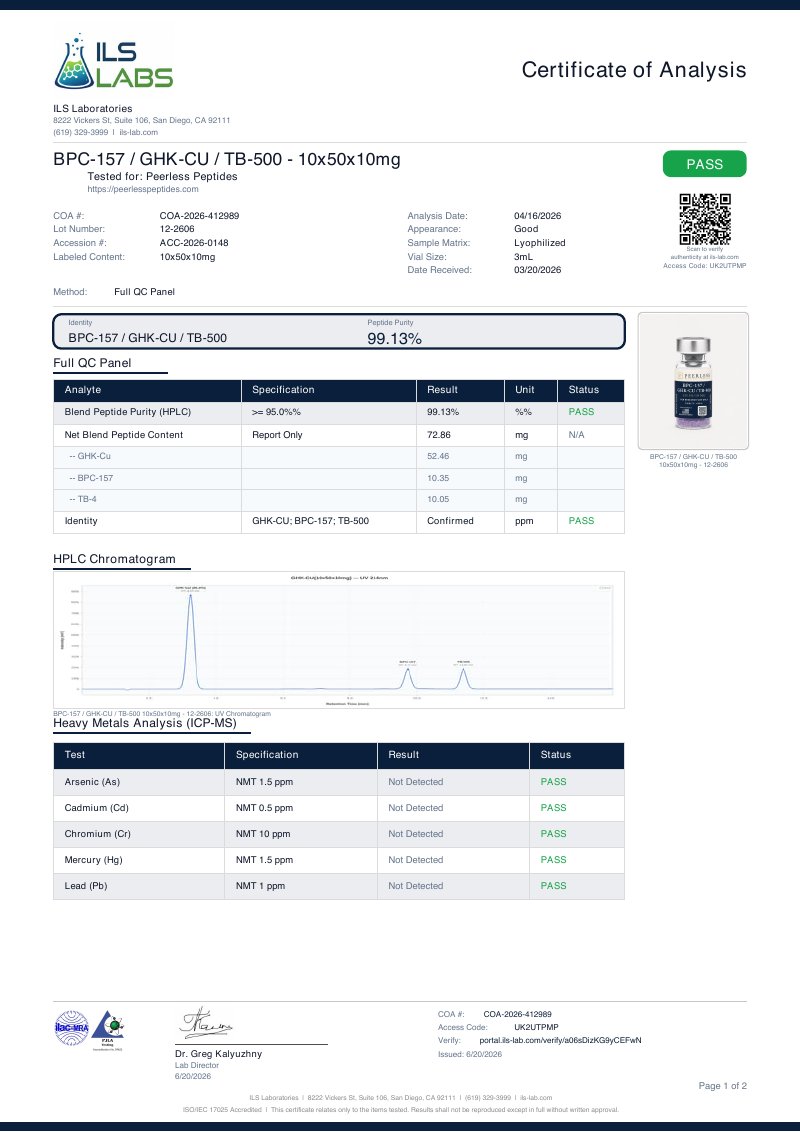
Independent Lab Results
The most comprehensive testing panel in research peptide commerce. Every batch is independently verified by ILS Laboratories — an ISO/IEC 17025 and PJLA-accredited facility in San Diego, CA.
- Identity
- Purity (HPLC)
- Endotoxin (USP <85>)
- Sterility screen (PCR)
- Heavy metals (ICP-MS per USP <233>)
Biochemical Profile
- CAS Number
- 137525-51-0 (BPC-157), 89030-95-5 (GHK-Cu), 885340-08-9 (TB-500)
- Molecular Formula
- C62H98N16O22 (BPC-157), C14H22CuN6O4 (GHK-Cu), C38H68N10O14 (TB-500)
- Molecular Weight
- 1419.54 (BPC-157), 402.9 (GHK-Cu), 889.02 (TB-500) g/mol
- Purity
- >99% (each component) (HPLC-UV per component (214-220 nm; GHK-Cu adds 280 nm and ICP-MS Cu content))
- Amino Acid Sequence
- Gly-Glu-Pro-Pro-Pro-Gly-Lys-Pro-Ala-Asp-Asp-Ala-Gly-Leu-Val | Gly-His-Lys (1:1 Cu(II) coordination complex) | Ac-Leu-Lys-Lys-Thr-Glu-Thr-Gln
Three Independent Pathways: BPC-157 NO/VEGFR2, GHK-Cu Copper Transport and ECM, TB-500 Actin Sequestration
The three components in this blend target distinct molecular pathways. BPC-157 has been investigated as a modulator of nitric oxide (NO) signaling and as an upstream effector in the VEGFR2-Akt-eNOS angiogenesis pathway across rodent models[1]. The Chang group at Chang Gung University, Taiwan, mapped the VEGFR2 phosphorylation observations in cultured rat tendon fibroblasts and is the only non-Zagreb laboratory to have published substantive original mechanism research on BPC-157[2]. The receptor-binding profile of BPC-157 has not been characterized in human tissue, and no specific high-affinity receptor has been identified in the published peer-reviewed literature.
GHK-Cu operates through a chemically distinct mechanism. The tripeptide Gly-His-Lys presents an ATCUN-style (amino-terminal Cu(II)/Ni(II) binding) coordination site with reported log K values of approximately 16.44 at physiological pH, sufficient to extract Cu(II) from the N-terminal site of serum albumin in vitro[3]. The coordination geometry damps Cu(II)/Cu(I) redox cycling, which has been associated in physical-chemistry studies with suppression of Fenton-type hydroxyl-radical chemistry that free Cu(II) would otherwise catalyze[4]. In fibroblast culture, the Reims group at Faculté de Médecine (Maquart and colleagues) reported observations on collagen synthesis with peak responses near 10^-9 M and onset near 10^-12 to 10^-11 M[5].
TB-500 (Ac-LKKTETQ) is a synthetic 7-amino-acid fragment of the parent protein thymosin beta-4 (Tβ4), a 43-residue intrinsically disordered protein. The strongest mechanistic finding in the broader Tβ4 literature is 1:1 binding of monomeric ATP-G-actin via the LKKTET motif located at residues 17-22 of the parent protein, with affinity in the sub-micromolar range[6]. Philp et al. reported that the LKKTETQ 7-mer and full Tβ4 displayed comparable activity at sub-micromolar concentrations in endothelial cell-migration and aortic-ring sprouting assays, the single most-cited piece of published evidence supporting equivalence between the 7-mer and the parent protein in any biological readout[7].
No peer-reviewed published study has characterized combined mechanism for any two-component or three-component combination of BPC-157, GHK-Cu, and TB-500. The three pathways are independent at the molecular level. Whether any pharmacokinetic or pharmacodynamic interaction exists in vivo when the three peptides are co-administered remains an open research question, and one with no published primary data in any species as of May 2026.
Research Applications
Component Composition
This blend is a fixed-composition lyophilized vial containing three chemically distinct synthetic peptides. BPC-157 (CAS 137525-51-0, PubChem CID 9941957) is a synthetic 15-amino-acid pentadecapeptide with sequence Gly-Glu-Pro-Pro-Pro-Gly-Lys-Pro-Ala-Asp-Asp-Ala-Gly-Leu-Val, molecular formula C62H98N16O22, and molecular weight 1419.54 g/mol. GHK-Cu (CAS 89030-95-5, PubChem CID 378611) is the 1:1 copper(II) coordination complex of the tripeptide Gly-His-Lys, molecular formula C14H22CuN6O4, molecular weight approximately 402.9 g/mol; the FDA UNII is 6BJQ43T1I9 and the INCI cosmetic name is Copper Tripeptide-1. TB-500 (CAS 885340-08-9, PubChem CID 62707662) is the synthetic acetylated heptapeptide Ac-Leu-Lys-Lys-Thr-Glu-Thr-Gln corresponding to residues 17-23 of the parent protein thymosin beta-4 (Tβ4, UniProt P62328); molecular formula C38H68N10O14, molecular weight 889.02 g/mol. The full 43-amino-acid Tβ4 (CAS 77591-33-4, MW approximately 4921 g/mol) is structurally distinct from the 7-mer commercial form and differs by more than 5x in mass. Per-batch Certificates of Analysis report lot-specific purity by HPLC-UV (214-220 nm) for each component plus ICP-MS copper-content stoichiometry for GHK-Cu.
BPC-157 Research Summary
BPC-157 was first described by the Sikirić research group at the University of Zagreb in 1991-1993 as a fragment of a putative ~40 kDa 'body protection compound' protein[8]. The parent protein has never been formally sequenced or assigned a UniProt entry. The published literature consists of approximately 200 PubMed-indexed papers, approximately 87% of which have Sikirić as first or senior author. The only independent (non-Zagreb) primary mechanism work has come from the Chang group at Chang Gung University, Taiwan, reporting observations on VEGFR2 phosphorylation, fibroblast migration markers, and growth-hormone-receptor signaling in cultured rat tendon preparations[2]. The only independent pharmacokinetic study (Xu et al. 2022) reported plasma half-lives of approximately 15 minutes (IV rat), 5 minutes (IV beagle dog), and 20-30 minutes (intramuscular), with bioavailability 14-19% in rats and 45-51% in dogs[9]. As of May 2026, two NCT registrations exist: NCT02637284 (Phase I PCO-02, PharmaCotherapia, never published) and NCT07437547 (Phase 2 acute hamstring strain, Hudson Biotech, recruiting since February 2026). Full literature review including methodology critique is on the BPC-157 individual PDP.
GHK-Cu Research Summary
GHK-Cu was first isolated from human plasma by Loren Pickart at UCSF in 1973[10]. The published literature spans approximately 130 PubMed-indexed papers and bifurcates into a topical/cosmetic route (legally established under FDCA via INCI 'Copper Tripeptide-1' since approximately 1994) and an injectable/RUO route (FDA-restricted). The most-cited transcriptomic claim in marketing copy derives from Pickart, Vasquez-Soltero, and Margolina (2014), a secondary computational reanalysis of Broad Institute Connectivity Map (build 02) microarray data across three Affymetrix profiles (two PC3 prostate-cancer epithelial and one MCF7 ER+ breast-cancer epithelial) at 1 micromolar free GHK with a 50% expression-change threshold and no FDR correction, yielding approximately 4,192 gene changes[11]. This single reanalysis has not been independently replicated by a non-Pickart group on a skin-relevant cell line with modern RNA-seq. The published topical-route RCT evidence consists of the Mulder 1994 multicenter trial in diabetic neuropathic ulcers (positive)[12], the Leyden 2002 AAD conference abstract (never peer-reviewed published), and the Miller 2006 split-face CO2-laser study (no statistically significant benefit in blinded objective measures)[13]. No published peer-reviewed RCT of injectable GHK-Cu in any indication exists. Full literature review is on the GHK-Cu individual PDP.
TB-500 Research Summary
TB-500 (Ac-LKKTETQ) is the synthetic 7-amino-acid acetylated heptapeptide corresponding to residues 17-23 of the parent protein thymosin beta-4 (Tβ4). The two molecules differ by more than 5x in mass: the 7-mer is approximately 889 Da and full Tβ4 is approximately 4921 Da. The 7-mer is the form sold in laboratory research commerce; full-length Tβ4 is the form used in every RegeneRx-sponsored clinical trial across approximately 25 years of clinical development. The Philp et al. (2003) dermal-wound study in db/db diabetic and aged mice is the single most-cited direct comparison between the 43-mer and the 7-mer and reported observations on epithelial repair markers in aged animals[14]. Whether the 7-mer recapitulates full-Tβ4 activity in corneal, cardiac, or other indications has not been independently established in the published literature. The four completed Phase 3 trials in the RegeneRx ophthalmic program (ARISE-1 n=317, ARISE-2 n=601, ARISE-3 n=700, and SEER-3 European neurotrophic keratopathy) all missed their pre-specified primary endpoints. NCT07487363 (Hudson Biotech, Phase 1/2 in stable atherosclerotic cardiovascular disease, recruiting) is the first publicly registered US trial using the LKKTETQ 7-mer by name; results are pending[15]. Full literature review is on the TB-500 individual PDP.
Combined Administration Literature
No peer-reviewed published study has characterized combined administration of BPC-157, GHK-Cu, and TB-500 in any species or research model as of May 2026. No registered clinical trial uses any two-component or three-component combination of these molecules; the three Hudson Biotech trials (NCT07437547 for BPC-157 hamstring strain, NCT07437586 for topical GHK-Cu acute skin wound, and NCT07487363 for TB-500 stable atherosclerotic cardiovascular disease) each use one peptide in isolation. No published peer-reviewed pharmacokinetic study has reported plasma concentrations or tissue distribution of any of the three peptides administered concurrently. No published peer-reviewed pharmacodynamic study has reported additive, subtractive, or interaction effects in any in vitro or in vivo model. Because the three molecules target distinct molecular pathways (BPC-157 NO/VEGFR2 signaling, GHK-Cu copper coordination and ECM modulation, TB-500 actin-monomer sequestration), pathway-level independence is the most defensible scientific framing of this blend. The individual component PDPs maintain the full primary-literature record for each peptide. This blend is supplied as a fixed-composition research preparation for laboratory convenience and does not carry combined-pharmacology data of its own.
Replication & Clinical Status
All three components are on the FDA Pharmacy Compounding Advisory Committee (PCAC) Day 1 docket scheduled for July 23, 2026; the FDA docket lists a proposed ulcerative-colitis indication for BPC-157 and a proposed wound-healing indication for TB-500, while GHK-Cu has been grouped for a separate February 2027 PCAC tranche alongside Cathelicidin (LL-37), Dihexa Acetate, PEG-MGF, and Melanotan II. All three were removed from FDA 503A Category 2 (Do-Not-Compound) effective April 22, 2026; removal does not confer Category 1 status or compoundability. World Anti-Doping Agency status differs per component: BPC-157 is listed under S0 (Non-Approved Substances), TB-500 is listed under S2 (Peptide Hormones, Growth Factors, Related Substances and Mimetics), and GHK-Cu is not explicitly named on the 2026 WADA Prohibited List although interpretive S0 / S2 catch-all language plausibly applies. Australia's TGA has scheduled BPC-157 as Schedule 9 (Prohibited Substance) effective July 1, 2026; TB-500 and GHK-Cu are not on the TGA Poisons Standard as of May 2026. The April 1, 2026 federal indictment of Justin Bradley Watkins (1:26-cr-00015-DBB, District of Utah) specifically named BPC-157, TB-500, GHK, and GHK-Cu among the misbranded peptides at issue. Across approximately 36 years since the foundational BPC-157 patent filing, approximately 53 years since the GHK-Cu discovery, and approximately 25 years of Tβ4 clinical development, no Phase 3 efficacy data on combined administration of any pair or triplet of these molecules has been published in the peer-reviewed clinical literature.
Handling & Storage
- Storage (lyophilized)
- -20°C, sealed amber vial with desiccant, dark; 18-24 months (GHK-Cu is the limiting component)
- Storage (in solution)
- 2-8°C, single-use aliquots only; freeze-thaw cycling reduces potency
- Shelf Life
- 18-24 months lyophilized
Research References
- [1] Sikirić P, Seiwerth S, Rucman R, et al. Stable gastric pentadecapeptide BPC 157-NO-system relation. Curr Pharm Des. 2014;20(7):1126-1135. PMID:23755725
- [2] Chang CH, Tsai WC, Lin MS, Hsu YH, Pang JHS. The promoting effect of pentadecapeptide BPC 157 on tendon healing involves tendon outgrowth, cell survival, and cell migration. J Appl Physiol. 2011;110(3):774-780. doi:10.1152/japplphysiol.00945.2010PMID:21030672
- [3] Sigel H, Martin RB. Coordinating properties of the amide bond. Stability and structure of metal ion complexes of peptides and related ligands. Chem Rev. 1982;82(4):385-426. doi:10.1021/cr00050a003
- [4] Beck WT, et al. The redox chemistry of the Cu(II)-glycylhistidyllysine complex: implications for biological activity. J Inorg Biochem. 2007;101(1):131-138. PMID:17017991
- [5] Maquart FX, Pickart L, Laurent M, Gillery P, Monboisse JC, Borel JP. Stimulation of collagen synthesis in fibroblast cultures by the tripeptide-copper complex glycyl-L-histidyl-L-lysine-Cu2+. FEBS Lett. 1988;238(2):343-346. PMID:3169264
- [6] Safer D, Elzinga M, Nachmias VT. Thymosin β4 and Fx, an actin-sequestering peptide, are indistinguishable. J Biol Chem. 1991;266(7):4029-4032. PMID:1996337
- [7] Philp D, Huff T, Gho YS, Hannappel E, Kleinman HK. The actin binding site on thymosin β4 promotes angiogenesis. FASEB J. 2003;17(14):2103-2105. PMID:14500546
- [8] Sikirić P, Petek M, Rucman R, et al. A new gastric juice peptide, BPC. An overview of the stomach-stress-organoprotection hypothesis and beneficial effects of BPC. J Physiol Paris. 1993;87(5):313-327. doi:10.1016/0928-4257(93)90038-uPMID:8298609
- [9] Xu T, Zhang Z, et al. Pharmacokinetics, bioavailability, and tissue distribution of body protection compound 157 (BPC 157) in rats and beagle dogs. Front Pharmacol. 2022;13:1052033. PMID:36588717
- [10] Pickart L, Thaler MM. Tripeptide in human serum which prolongs survival of normal liver cells and stimulates growth in neoplastic liver. Nat New Biol. 1973;243(124):85-87. PMID:4349963
- [11] Pickart L, Vasquez-Soltero JM, Margolina A. GHK and DNA: resetting the human genome to health. Biomed Res Int. 2014;2014:151479. PMID:25302294
- [12] Mulder GD, Patt LM, Sanders L, Rosenstock J, Altman MI, Hanley ME, Duncan GW. Enhanced healing of ulcers in patients with diabetes by topical treatment with glycyl-l-histidyl-l-lysine copper. Wound Repair Regen. 1994;2(4):259-269. PMID:17147644
- [13] Miller TR, Wagner JD, Baack BR, Eisbach KJ. Effects of topical copper tripeptide complex on CO2 laser-resurfaced skin. Arch Facial Plast Surg. 2006;8(4):252-259. PMID:16847171
- [14] Philp D, Badamchian M, Scheremeta B, et al. Thymosin β4 and a synthetic peptide containing its actin-binding domain promote dermal wound repair in db/db diabetic mice and in aged mice. Wound Repair Regen. 2003;11(1):19-24. PMID:12581423
- [15] Hudson Biotech. TB-500 (17-23 fragment) for cardiovascular biomarkers in stable atherosclerotic cardiovascular disease. ClinicalTrials.gov Identifier: NCT07487363 (Phase 1/2, recruiting; 80 estimated participants; verified 2026-05-19).
Scientific Journal Author
Predrag Sikirić, MD, PhD
Department of Pharmacology, University of Zagreb School of Medicine
Landmark Publications
- Sikirić P, Petek M, Rucman R, et al. A new gastric juice peptide, BPC. J Physiol Paris. 1993;87(5):313-327. (PMID 8298609) — foundational BPC-157 characterization
- Sikirić P, Seiwerth S, Rucman R, et al. Stable gastric pentadecapeptide BPC 157-NO-system relation. Curr Pharm Des. 2014;20(7):1126-1135. (PMID 23755725) — NO-system mechanism review
- Sikirić P, Seiwerth S, Brcic L, et al. Stable gastric pentadecapeptide BPC 157 as a novel cytoprotective mediator. Curr Pharm Des. 2018;24(18):1990-2001. (PMID 29879879) — 2018 Zagreb synthesis review
Dr. Sikirić is independently cited here as the originating researcher of BPC-157 at the University of Zagreb. Dr. Sikirić originated BPC-157 only; the other two components in this blend were characterized by separate research groups. GHK and the GHK-Cu copper-tripeptide complex were isolated from human plasma by Dr. Loren Pickart at the University of California, San Francisco in 1973 (Pickart died December 10, 2023). The parent protein thymosin beta-4 (Tβ4) was characterized by Dr. Allan L. Goldstein and colleagues at George Washington University, with the LKKTETQ 7-mer (TB-500) developed by the Goldstein and Hynda K. Kleinman collaboration in the early 2000s. The individual component PDPs name each originating researcher in their respective scientificAuthor blocks. There is no affiliation, financial relationship, or endorsement between Dr. Sikirić, Dr. Pickart or the Pickart family, Dr. Goldstein, the University of Zagreb, the University of California, George Washington University, Skin Biology, ProCyte, PhotoMedex, RegeneRx, or any other associated commercial entity, and Peerless Peptides.
Component Compounds
This blend is formulated from the following individual research compounds, each with its own reference entry.