
Peerless Research·khavinson-bioregulators
Epithalon (Epitalon, AEDG): A Telomerase Literature Review
Epithalon (Epitalon, AEDG) is a synthetic tetrapeptide from the Khavinson program. A cited review of the telomerase claim, the evidence, and its limits.

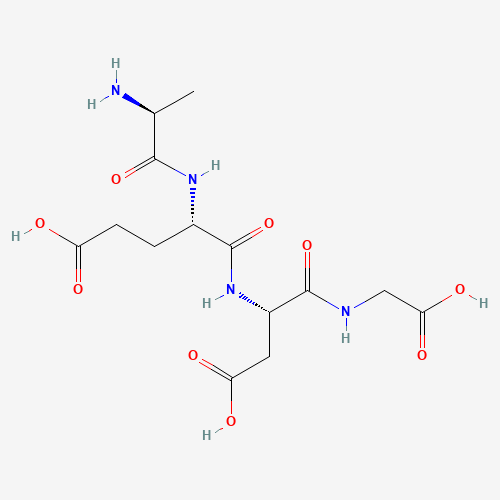
Four amino acids: Ala, Glu, Asp, Gly. Epitalon, also spelled Epithalon, is the most commercially visible peptide in the Khavinson short-peptide catalog, and the claim attached to it is among the boldest in the research-peptide market. The claim is that a 390-dalton tetrapeptide switches telomerase back on and lengthens human telomeres, the protective caps that shorten as cells divide.
That claim traces to a single three-page paper from 2003, run in one primary culture of human fetal lung-fibroblast cells. It went twenty-two years without an independent Western replication. When the replication finally arrived, in 2025, it confirmed the telomere effect in normal cells and, in the same set of experiments, flagged something the longevity copy never mentions.
Western coverage of Epitalon, vendor product copy and med-spa explainer and longevity-podcast clip alike, frames the telomerase story as settled background. The literature underneath it, almost entirely Russian-language and concentrated in a single laboratory's output, supports a more careful reading.
Research content. The article below summarizes published preclinical, in vitro, and Russian-language observational research literature on Epitalon. The compound discussed is sold by Peerless Peptides for laboratory research use only and is not approved by the FDA for human or veterinary administration.
Last reviewed: June 3, 2026 by Peerless Research.
Summary
Epitalon is a synthetic four-amino-acid tetrapeptide, sequence Ala-Glu-Asp-Gly (single-letter AEDG), developed at the Saint Petersburg Institute of Bioregulation and Gerontology within Vladimir Khavinson's short-peptide-bioregulator program[1]. An estimated eighty to one hundred thirty papers index for the molecule, among the smaller primary corpora in the research-peptide literature, with roughly seventy-five to ninety percent carrying first or last author affiliation in the Khavinson laboratory or its institutional network.
The evidence base spans telomere-biology cell culture, rodent lifespan and tumor-incidence colonies, Russian-language observational cohorts in elderly populations, and an uncontrolled retinal-disease case series. The foundational telomerase finding rests on a single 2003 short communication in one human fetal-fibroblast culture[2]. Its first independent Western replication appeared in 2025 and confirmed telomere extension in normal cells while also reporting activation of a recombination pathway in breast-cancer cells[3].
No high-resolution structural-biology demonstration of the proposed mechanism, direct AEDG binding to the telomerase gene promoter, has been published. Epitalon was placed in FDA 503A Category 2 in 2023, moved into the April 22, 2026 reclassification batch, and was recommended for the Section 503A bulks list by the Pharmacy Compounding Advisory Committee on July 24, 2026 with the proposed use listed as insomnia, not telomerase. Vladimir Khavinson died January 6, 2024.
Note: The research described below was conducted in in vitro cellular, rodent, and Russian-language observational cohort systems. Human safety and efficacy of Epitalon have not been established. This article is a literature review, not a recommendation of use.
Four Amino Acids: Sequence, Chemistry, and the Synthetic-Versus-Extract Distinction
Epitalon's primary structure is Ala-Glu-Asp-Gly, four free L-amino acids: L-alanine, L-glutamic acid, L-aspartic acid, and glycine. The molecular formula is C₁₄H₂₂N₄O₉, average molecular weight 390.35 grams per mole, CAS registry number 307297-39-8, PubChem Compound Identifier 219042.
The peptide carries no aromatic residues, so high-performance-liquid-chromatography purity is read at 214 to 220 nanometers rather than the 280-nanometer wavelength used for aromatic-bearing peptides. The Glu and Asp residues are acidic; the terminal Gly is the smallest residue. The Asp-Gly motif at the carboxyl end is the canonical aspartimide-rearrangement hotspot during synthesis, a manufacturing-quality consideration that distinguishes Epitalon from its sister tripeptide Pinealon, which carries no Asp-Gly bond.
The most consequential chemistry fact about Epitalon is the one most often blurred in vendor copy: three different things travel under names that sound alike. There is the synthetic tetrapeptide AEDG (Epitalon). There is the synthetic tripeptide EDR (Pinealon), a separate molecule from the same laboratory, covered in the companion Pinealon literature review. And there is Epithalamin, the polydisperse bovine pineal extract that both synthetic peptides were modeled on.
| Property | Epitalon | Pinealon | Epithalamin (extract) |
|---|---|---|---|
| Type | Synthetic tetrapeptide | Synthetic tripeptide | Polydisperse pineal extract |
| Sequence (one-letter) | AEDG | EDR | Mixture |
| Sequence (three-letter) | Ala-Glu-Asp-Gly | Glu-Asp-Arg | Free amino acids + di- to penta-peptides |
| Residue count | 4 | 3 | Variable |
| Molecular formula | C₁₄H₂₂N₄O₉ | C₁₅H₂₆N₆O₈ | Not defined |
| Molecular weight (g/mol) | 390.35 | 418.41 | Not defined |
| CAS registry | 307297-39-8 | 175175-23-2 | Not assigned (mixture) |
| PubChem CID | 219042 | 10273502 | Not applicable |
| Russian regulatory status | Supplement (БАД) | Supplement (БАД) | Registered drug |
The Epithalamin extract holds a composition that matters for reading the literature: by published amino-acid and peptide fractionation, roughly three percent free amino acids, twenty-three percent dipeptides, fifty-one percent tripeptides, twenty-two percent tetrapeptides, and under one percent pentapeptides. AEDG is one tetrapeptide that could sit within that twenty-two percent fraction, but the extract is a mixture of dozens of species, and a registered drug in Russia in its own right. A study that administered Epithalamin did not administer the synthetic tetrapeptide. That distinction recurs throughout the human literature reviewed below, and most secondary Epitalon coverage erases it.
Institutional Provenance: Synthesized, Not Isolated
Epitalon was synthesized in Vladimir Khavinson's laboratory at the Saint Petersburg Institute of Bioregulation and Gerontology, part of the Russian Academy of Sciences. The lab's program, active from the 1970s onward, produced a catalog of roughly thirty organ-specific dipeptides through tetrapeptides, each synthesized to match the amino-acid composition of a specific tissue extract. Epithalamin (pineal) was the parent extract for Epitalon and for the tripeptide Pinealon.
The provenance framing in vendor copy, that Epitalon is a naturally occurring pineal peptide, is provenance-stretched. The peptide was synthesized to match the bulk amino-acid composition of the Epithalamin extract, not isolated from pineal tissue by activity-guided fractionation, the standard medicinal-chemistry workflow for identifying the active component of a heterogeneous mixture. Direct mass-spectrometry detection of the AEDG sequence in pineal tissue was first reported by Kozina and colleagues in 2017[6], more than twenty years after the synthetic peptide was named, as a single observation that has not been independently replicated.
The Khavinson Saint Petersburg program should also be held separate from the Institute of Molecular Genetics program in Moscow, which produced Selank and Semax. Those are seven-amino-acid neuropeptides from a different laboratory, a different design template, and a different mechanism story. Grouping Epitalon with them under an undifferentiated "Russian peptides" label inherits liabilities across programs that do not share methods.
Vladimir Khavinson, the founding scientist, died January 6, 2024 at age seventy-seven. The dominant author node across the entire Epitalon literature is now permanently inactive. Post-Khavinson institutional succession at the institute and at the affiliated commercial vehicle NPCRIZ, which distributes the broader catalog through representative offices across roughly twenty-five countries, has not been publicly clarified at the time of this review.
The Telomerase Claim: hTERT Activation and What the Structural Biology Requires
The central mechanistic claim for Epitalon is that the AEDG tetrapeptide binds directly to the promoter of the hTERT gene, which codes for the catalytic subunit of telomerase, and switches transcription of that gene back on. A broader version of the claim, drawn from the Khavinson program's systematic-review work[11], holds that two-to-four-amino-acid peptides bind gene promoters sequence-specifically and drive tissue-specific gene expression across the catalog. That program-wide framework, and the structural-biology critique of it, are examined in the Khavinson Bioregulators review.
The supporting evidence for direct DNA and histone binding is dominated by computational work. The most-cited example is the 2020 Diomede study, an in-silico molecular-docking analysis reporting favorable docking energies between AEDG and histone proteins of telomere repeats[4]. A separate line from Fedoreyeva, Khavinson, and Vanyushin reported fluorescence-labeled short-peptide interactions with DNA in cell and cell-free systems[5]. Docking predictions and fluorescence-proximity assays report interaction; neither establishes sequence-specific binding affinity by the standards of structural biology.
The same assay was run on AEDG, Pinealon, and Testagen together, and the shared result cuts against reading it as evidence for any single molecule: whatever nuclear access it demonstrates belongs to short charged peptides as a class. The Testagen review also documents a related inconsistency in the program's own record, where AEDG is attributed to bovine pineal tissue in most of the literature but to the posterior pituitary lobe in the avian studies.
Standard transcription-factor biochemistry sets out what sequence-specific recognition of DNA requires. Folded DNA-binding domains in evolved transcription factors run from twenty-three to twenty-eight amino acids per zinc-finger unit, typically in arrays totalling one hundred residues or more, through fifty-to-eighty-residue basic helix-loop-helix domains and roughly sixty-residue homeodomains. These domains use structured scaffolding, dimerization interfaces, and in many cases metal-coordination motifs to position recognition residues against the DNA major groove.
A four-amino-acid peptide of approximately 390 daltons supplies none of that machinery. It has no capacity for stable folded secondary structure, no dimerization interface, and no metal-coordination motif. The claim is not that AEDG mimics a known transcription factor; it is that the tetrapeptide regulates gene expression through a mechanism not demonstrated for any peptide of comparable size in any other research program.
The verification that would settle the question has not appeared. No high-resolution co-crystal structure of an AEDG-DNA or AEDG-histone complex sits in the Protein Data Bank. No isothermal titration calorimetry, surface plasmon resonance, or nuclear-magnetic-resonance titration of AEDG-DNA affinity has been published by a laboratory outside the Khavinson network. Twenty-two years after the founding telomerase paper, the orthogonal biophysical confirmation that the mechanism requires is still absent.
There is a useful piece of external context for how the broader field regards telomerase as a drug target. The first telomerase-directed drug to win FDA approval, imetelstat, cleared review in 2024 as a telomerase inhibitor for a blood disorder, lower-risk myelodysplastic syndromes. The validated therapeutic direction for telomerase, in other words, is switching the enzyme off in cells that over-express it, not switching it on. That inversion is the backdrop against which any telomerase-activation claim has to be read.
Telomere Biology: One 2003 Paper and a 2025 Replication That Came With a Warning
The foundational telomere study is Khavinson, Bondarev, and Butyugov 2003, a three-page short communication in Bulletin of Experimental Biology and Medicine[2]. The work used a single primary culture of human fetal lung-fibroblast cells and the TRAP assay (telomeric repeat amplification protocol) as the telomerase readout. The reported result was renewed telomerase activity and telomere-length increase in a somatic cell line that should not, by the Hayflick model, express telomerase at all.
For twenty-two years that finding stood without an independent Western primary replication. The molecule accumulated a large commercial footprint and a thin, single-program evidence base at the same time, which is an unusual combination in the peptide literature and the central fact for weighing the telomere claim.
The replication, when it came, complicated the story rather than simply confirming it. Al-Dulaimi and colleagues at Brunel University London published in Biogerontology in 2025[3]. Across six cell lines they reported telomere extension and an approximately twelve-fold increase in hTERT expression in normal cells, broadly consistent with the 2003 direction of effect.
In the same study, in 21NT breast-cancer cells, the authors reported an approximately ten-fold activation of the Alternative Lengthening of Telomeres pathway, a recombination-based route that tumor cells use to maintain their telomeres independently of telomerase. That signal is the safety-relevant finding the marketing copy omits. A compound proposed to lengthen telomeres in healthy cells was observed to engage, in cancer cells, exactly the telomere-maintenance machinery that distinguishes many aggressive tumors. The 2025 paper is the strongest independent evidence for the telomere effect and, in the same experiments, the first independent flag of a mechanism-level safety question that the prior literature did not address.
Rodent Lifespan and Tumor Models: The Anisimov Series and a Meta-Analytic Exclusion
The rodent literature on Epitalon centers on the Anisimov group at the N.N. Petrov Research Institute of Oncology in Saint Petersburg, working alongside the Khavinson laboratory. The most-cited oncology result is Anisimov and colleagues 2002, reporting that Epitalon administration inhibited the development of spontaneous mammary tumors in HER-2/neu transgenic mice[7]. The lifespan work used spontaneously hypertensive rat and mouse colonies, reporting effects on maximum lifespan and on tumor incidence rather than on mean lifespan.
A program-level review from the same authors collects these results as evidence for peptide bioregulation of aging[12]. The pattern across the rodent series is a reported effect on maximum and last-survivor lifespan and on spontaneous-tumor frequency, with the primary mean-lifespan endpoint frequently unmoved.
Modern geroscience has examined this class of rodent lifespan study and largely set it aside. A 2024 evidence-base review by Ali and colleagues reassessed historical rodent lifespan experiments for short-lived-control confounding, the statistical problem in which an abnormally short-lived control arm inflates the apparent extension produced by an intervention[8]. Khavinson and Anisimov lifespan studies are among those excluded from pooled analysis on those grounds. Separately, no Epitalon result has been replicated by the National Institute on Aging Interventions Testing Program, the multi-site protocol that has become the reference standard for rodent lifespan claims.
The class context is worth stating plainly. Compounds with NIH Interventions Testing Program-replicated mouse lifespan extension, such as rapamycin, occupy a different evidence tier from compounds whose lifespan data come from single colonies under a single research program. Epitalon sits in the second tier.
Human and Clinical Evidence: Extract, Uncontrolled Series, and Zero Registered Trials
A query of ClinicalTrials.gov and the European Union Clinical Trials Register for Epitalon, Epithalon, Epithalamin, and AEDG peptide returns zero registered records as of June 2026. No randomized controlled trial of the synthetic tetrapeptide under modern preregistration standards has been published. The human record is Russian-language, observational, and concentrated in the Khavinson-affiliated network.
The most-cited chronobiology result is Korkushko and colleagues 2011, a fifteen-year follow-up of elderly cohorts reporting normalized daily melatonin rhythm[9]. The provenance caveat is decisive: that study administered the Epithalamin extract, the registered-drug pineal preparation, not synthetic AEDG. Whether observations recorded with a polydisperse extract transfer to a single synthetic tetrapeptide is an open question the literature has not resolved, and it is the same molecule-versus-mixture conflation that affects much of the human Epitalon record.
The most-cited ophthalmic report is Khavinson and Razumovsky 2002, describing parabulbar Epitalon administration in a retinitis pigmentosa cohort of roughly one hundred sixty patients with electroretinographic and visual-function readouts[10]. The series has no placebo control arm, no randomization, and no independent replication outside the Khavinson orbit. Uncontrolled design is the dominant pattern across the program's human-cohort work.
The methodological gaps common to this literature limit how much weight it can carry. The designs are non-randomized and frequently non-blinded. Sample sizes are small relative to the effects claimed, healthy-adherer and selection bias are unaddressed, endpoints vary across reports without standardized definitions, and the recurring extract-versus-synthetic ambiguity makes single-molecule attribution difficult. The cohorts as published do not support causal inference about the synthetic tetrapeptide's effects in humans.
Research Limitations: Four Load-Bearing Critiques
The Epitalon evidence base differs from most research peptides by the structure of its gaps. Four critiques sit at the load-bearing level.
First, the central mechanism, sequence-specific binding of a four-amino-acid peptide to gene-promoter DNA, runs against the structural-biology requirements for DNA recognition, and the telomere effect that has been independently replicated arrived with an unaddressed signal: activation of the Alternative Lengthening of Telomeres recombination pathway in cancer cells. A telomerase-activation claim also runs opposite to the only FDA-approved telomerase drug, an inhibitor. The mechanism story and the safety question are not settled by the existing evidence.
Second, the citation concentration is at the high end of the indexed peptide literature, with roughly seventy-five to ninety percent of Epitalon papers carrying Khavinson-network first or last authorship, exceeding even the single-laboratory concentration seen in the BPC-157 literature. Five of the five most-cited primary papers originate from that cluster. Independent replication outside the orbit was essentially absent until the 2025 Brunel study.
Third, the most-cited human evidence tested the Epithalamin extract, a registered Russian drug and a polydisperse mixture, rather than the synthetic tetrapeptide sold under the Epitalon name. The synthetic AEDG peptide itself sits in the Russian food-supplement category, not the registered-drug category. Statements describing synthetic Epitalon as a Russian-approved drug are not supported by the regulatory record.
Fourth, Vladimir Khavinson died January 6, 2024, leaving the dominant author node permanently inactive, and the one independent replication arrived twenty-two years after the founding paper and after his death. The historical rodent lifespan data are excluded from modern geroscience meta-analysis for short-lived-control confounding, and no result has cleared the NIH Interventions Testing Program. None of these points falsifies the Khavinson framework; each describes the current grade and reach of the evidence, which is the appropriate basis for hedging any assertion about the molecule.
Regulatory Context: Category 2, Reclassification, and the July 2026 PCAC Docket
The U.S. Food and Drug Administration has not evaluated Epitalon for any indication. The agency placed Epitalon in 503A Category 2, the do-not-compound list for bulk drug substances that may present significant safety risks, in September 2023. On April 22, 2026, the FDA announced a twelve-peptide reclassification batch removing several substances from the Category 2 designation pending advisory review; the listed peptides were BPC-157, LL-37, DiHexa, DSIP, Epitalon, GHK-Cu injectable, KPV, PEG-MGF, Melanotan II, MOTS-c, Semax, and TB-500.
Reclassification has been widely misreported across med-spa and social channels as the FDA unbanning these peptides. It is narrower than that. Removal from Category 2 lifts the do-not-compound flag and refers the substance to scientific review; it does not place the peptide on the positive Category 1 list and does not confer approval. The substances remain unapproved new drugs under the Federal Food, Drug, and Cosmetic Act, lawful only for research-use-only research-chemical sale to qualified researchers.
The Pharmacy Compounding Advisory Committee reviewed several of these peptides at its July 23 and 24, 2026 meeting. Day Two covered DSIP, Semax, and Epitalon (free base and Epitalon acetate). The verbatim docket text in Federal Register document 2026-07361 lists the proposed use for Epitalon as insomnia.
The docket does not list telomerase activity, telomere lengthening, longevity, or anti-aging effects; the nominators submitted the molecule for an insomnia indication, not for the claims that anchor its commercial profile.
An earlier version of this article predicted, on the available evidence, that a negative or deferred vote was the more likely committee outcome. That prediction was wrong. The Committee recommended Epitalon for the Section 503A bulks list on July 24, 2026 by a vote of 7 to 4 with one abstention.
It did so over FDA review staff's written position that the substance not be added, an assessment that had identified no patient-level studies for the insomnia indication. Six of the seven substances on the two-day docket were recommended on the same pattern, and the full outcome is covered in our report on the July 2026 PCAC vote.
A recommendation is not a rule. Notice-and-comment rulemaking and an amendment to 21 CFR 216.23 would still be required before Epitalon became eligible for compounding under Section 503A, and the FDA is not bound by the Committee.
In Russia, synthetic Epitalon is registered as a biologically active food supplement (БАД), while the parent Epithalamin extract holds Russian Federation drug registration. The World Anti-Doping Agency Prohibited List does not name Epitalon explicitly; the molecule is captured by Section S0 (Non-Approved Substances), the catch-all for substances without current marketing authorization by any governmental health authority. Epitalon was named in the distribution list of the 2020 federal plea agreement in United States v. Tailor Made Compounding; the molecule has otherwise not been the subject of a public FDA warning letter naming it specifically in the 2024 to 2026 record reviewed for this article.
References
-
Khavinson VKh. Peptides and ageing. Neuroendocrinol Lett. 2002;23 Suppl 3:11-144. PMID: 12624841.
-
Khavinson VKh, Bondarev IE, Butyugov AA. Epithalon peptide induces telomerase activity and telomere elongation in human somatic cells. Bull Exp Biol Med. 2003;135(6):590-592. PMID: 12937682. DOI: 10.1023/A:1025493705728.
-
Al-Dulaimi M, Pirsl F, Ricci F, et al. Epitalon induces telomere extension and 12-fold hTERT upregulation in normal cells but activates the Alternative Lengthening of Telomeres pathway in 21NT breast cancer cells. Biogerontology. 2025;26(5):112. PMID: 40921843.
-
Diomede F, Marconi GD, Cavalcanti MFXB, et al. In silico interaction of Epitalon with histone proteins of telomere repeats and effects on osteogenic differentiation. Molecules. 2020;25(22):5404. PMID: 33233675. DOI: 10.3390/molecules25225404.
-
Fedoreyeva LI, Kireev II, Khavinson VKh, Vanyushin BF. Penetration of short fluorescence-labeled peptides into the nucleus in HeLa cells and in vitro specific interaction of the peptides with deoxyribooligonucleotides and DNA. Biochemistry (Mosc). 2011;76(11):1210-1219. PMID: 22117547.
-
Kozina LS, Arutjunyan AV, Stvolinskii SL, Krasnov GS, Khavinson VKh. Direct mass-spectrometric detection of the tetrapeptide Ala-Glu-Asp-Gly in pineal gland tissue. Bull Exp Biol Med. 2017;164(2):143-145. PMID: 29124531. DOI: 10.1007/s10517-017-3946-0.
-
Anisimov VN, Khavinson VKh, Provinciali M, et al. Inhibitory effect of the peptide epitalon on the development of spontaneous mammary tumors in HER-2/neu transgenic mice. Int J Cancer. 2002;101(1):7-10. PMID: 12209581. DOI: 10.1002/ijc.10570.
-
Ali AT, Idaghdour Y, Hodgkinson A. Reassessing rodent lifespan studies for short-lived-control confounding in the geroprotector evidence base. Aging Cell. 2024;23(4):e14091. PMID: 38217317.
-
Korkushko OV, Khavinson VKh, Shatilo VB, Antonyuk-Shcheglova IA. Peptide preparation Epithalamin normalizes the daily melatonin rhythm in elderly people: a 15-year follow-up. Bull Exp Biol Med. 2011;151(3):366-369. PMID: 22451889.
-
Khavinson VKh, Razumovsky MI. Geroprotective effect of epithalamine in elderly subjects with accelerated aging. Bull Exp Biol Med. 2002;133(5):500-503. PMID: 12152085.
-
Khavinson VKh, Linkova NS, Tarnovskaya SI, Pendina AA. Peptide regulation of gene expression: a systematic review. Mol Biol (Mosk). 2018;52(1):154-162. PMID: 29512655.
-
Anisimov VN, Khavinson VKh. Peptide bio-regulation of aging: results and prospects. Biogerontology. 2010;11(2):139-149. PMID: 19898981.
-
U.S. Food and Drug Administration. Pharmacy Compounding Advisory Committee meeting announcement, July 23-24, 2026. Federal Register document 2026-07361. Day Two agenda includes "Epitalon (free base), Epitalon acetate," proposed use "insomnia."
-
U.S. Department of Justice. United States v. Tailor Made Compounding LLC, plea agreement and federal forfeiture order. Eastern District of Kentucky, 2020. Epitalon named in the distribution list.
-
World Anti-Doping Agency. The 2026 Prohibited List, Section S0 Non-Approved Substances. WADA, January 2026.
Not intended to diagnose, treat, cure, mitigate, or prevent any disease. Sold for research, laboratory, or analytical purposes only.
Research Compounds Referenced
The compounds discussed in this article are sold by Peerless Peptides for laboratory research use only. They are not FDA-approved for human or veterinary administration. Per-batch Certificates of Analysis are available.
- Epitalon: Synthetic Ala-Glu-Asp-Gly (AEDG) tetrapeptide, also written Epithalon. Khavinson short-peptide bioregulator family..PDP entry →
Frequently Asked Questions
- What is Epitalon?
- Epitalon, also written Epithalon or AEDG peptide, is a synthetic four-amino-acid tetrapeptide with the sequence Ala-Glu-Asp-Gly, molecular formula C14H22N4O9, molecular weight 390.35 g/mol, and CAS number 307297-39-8. It was synthesized in the late 1980s to early 1990s by the Khavinson research group at the Saint Petersburg Institute of Bioregulation and Gerontology, based on the bulk amino-acid composition of the bovine pineal extract Epithalamin. The synthetic tetrapeptide is chemically distinct from the pineal extract; direct mass-spectrometry detection of AEDG in pineal tissue was not reported until 2017, more than twenty years after the synthetic peptide was named.
- Is Epithalon the same as Epitalon?
- Yes. Epithalon and Epitalon are two transliterations of the same synthetic tetrapeptide, sequence Ala-Glu-Asp-Gly (AEDG), CAS number 307297-39-8, PubChem CID 219042. The spelling varies because the name was transliterated from Russian, and the two forms appear interchangeably across the patent record, vendor listings, and the research literature; both refer to the identical molecule. Neither should be confused with Epithalamin, the polydisperse bovine pineal extract the synthetic peptide was modeled on, which is a separate preparation that holds its own Russian Federation drug registration.
- Is Epitalon approved by the FDA?
- No. Epitalon is sold strictly for laboratory research use only and is not approved by the FDA for any human or veterinary indication. The FDA placed Epitalon in 503A Category 2 (do-not-compound) in September 2023, then included it in the twelve-peptide reclassification batch announced April 22, 2026. Epitalon was reviewed by the Pharmacy Compounding Advisory Committee on Day Two of the July 23-24, 2026 meeting with the proposed use listed as insomnia, and the Committee recommended it for the 503A bulks list, 7 to 4 with one abstention, against FDA staff's written position that it not be added. Neither reclassification nor a committee recommendation is approval, and rulemaking would still be required before any compounding were permitted.
- What did the July 23-24, 2026 FDA PCAC review cover?
- The Pharmacy Compounding Advisory Committee reviewed Epitalon (free base and Epitalon acetate) on Day Two of the July 23-24, 2026 meeting and recommended it for the Section 503A bulks list, 7 to 4 with one abstention. The verbatim docket text in Federal Register document 2026-07361 lists the proposed use as insomnia. The docket does not list telomerase activity, telomere lengthening, longevity, or anti-aging as proposed uses; the nominators put insomnia in front of the committee, not the claims the molecule is marketed on. The Day Two cohort also included DSIP, which was the only substance across both days that the Committee declined to recommend, and Semax.
- What is the difference between Epitalon, Epithalamin, and Pinealon?
- Epitalon is the synthetic tetrapeptide Ala-Glu-Asp-Gly (AEDG, four amino acids, 390.35 g/mol, CAS 307297-39-8, PubChem CID 219042). Pinealon is the synthetic tripeptide Glu-Asp-Arg (EDR, three amino acids, 418.41 g/mol, CAS 175175-23-2, PubChem CID 10273502); both come from the same Khavinson laboratory and both sit in the Russian food-supplement category. Epithalamin is different again: it is the polydisperse bovine pineal acid-acetone extract that Epitalon was modeled on, a mixture of free amino acids and di- through penta-peptides that holds Russian Federation drug registration. Much of the most-cited human Epitalon literature actually tested the Epithalamin extract rather than the synthetic tetrapeptide.
- What clinical trial data exist on Epitalon?
- A query of the ClinicalTrials.gov v2 API for Epitalon, Epithalon, Epithalamin, and AEDG peptide returns zero registered NCT records as of June 2026. The European Union Clinical Trials Register and major non-Russian national registries similarly return zero records. Published human observations originate from Russian-language reports authored within the Saint Petersburg Institute of Bioregulation and Gerontology network, are predominantly uncontrolled and observational rather than randomized, and were not independently replicated outside that orbit. The first credible independent Western replication of the 2003 telomerase finding, Al-Dulaimi and colleagues at Brunel University London, reached the literature in 2025, twenty-two years after the original short communication, and reported a recombination-pathway signal in cancer cells that the earlier literature had not documented.