
Peerless Research·alpha-msh
KPV Peptide: A Literature Review of the α-MSH Tripeptide
KPV is a synthetic tripeptide (Lys-Pro-Val), the C-terminal fragment of α-MSH. A review of its PepT1 transport, NF-κB mechanism, evidence, and limits.
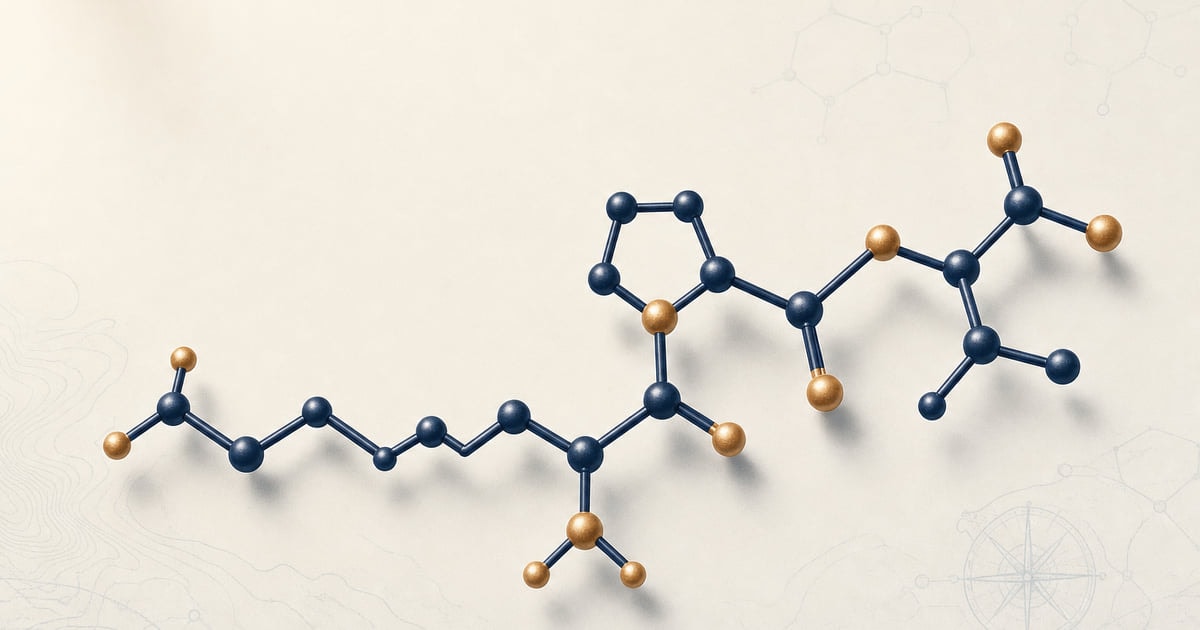
Three amino acids. Lysine, proline, valine. KPV is the last three residues of α-melanocyte-stimulating hormone, a 13-amino-acid hormone the body already makes, and it became a research compound in its own right because of a single counterintuitive finding.
In 1989, Marlene Hiltz and James Lipton at UT Southwestern reported that this C-terminal fragment retained the parent hormone's anti-inflammatory activity in a mouse contact-dermatitis model, despite lacking the receptor-binding core that defines melanocortin signaling[1]. The active part of the hormone, by the standard account, was supposed to be the central His-Phe-Arg-Trp motif. KPV does not contain it.
That tension, an active fragment stripped of the pharmacophore that was thought to carry the activity, is the most interesting fact about KPV and the most underreported. The commercial coverage of the compound, clinic blog and vendor product page alike, tends to describe KPV as a gut-healing or inflammation-calming peptide and skips the mechanism question entirely. The published literature is more specific, and more limited, than that framing suggests.
Research content. The article below summarizes published preclinical and in vitro research literature on KPV. The compound discussed is sold by Peerless Peptides for laboratory research use only and is not approved by the FDA for human or veterinary administration.
Last reviewed: May 31, 2026 by Peerless Research.
Summary
KPV is a synthetic three-amino-acid peptide, sequence Lys-Pro-Val (single-letter KPV), corresponding to residues 11 to 13 of α-melanocyte-stimulating hormone. It was characterized in 1989 by Hiltz and Lipton at UT Southwestern as the minimal C-terminal fragment of α-MSH that retained anti-inflammatory activity in a murine model[1]. The published evidence base is preclinical, concentrated in three institutional research axes, and spans murine colitis, in vitro epithelial, and rodent dermatitis systems.
The mechanistic literature reports two unusual features. KPV appears to act independently of the melanocortin receptors that the parent hormone engages, since it does not raise cAMP in macrophages[2]. And in intestinal-cell and rodent systems it was taken up through the di- and tripeptide transporter PepT1, which is inducibly expressed in inflamed colonic tissue[5]. The most explicit proposed mechanism is competition for importin-α3 binding with the NF-κB p65 subunit, blocking p65 entry into the nucleus[4].
As of 2026, no peer-reviewed Phase 1, Phase 2, or Phase 3 clinical trial of KPV for any indication has been published, and ClinicalTrials.gov returns no registered KPV trial. The FDA removed KPV from the 503A Category 2 do-not-compound list on April 22, 2026, and the Pharmacy Compounding Advisory Committee reviewed it on July 23, 2026, recommending it for the bulks list on an evidence base the agency's own staff had described as containing no supporting human studies.
Note: The research described below was conducted in murine, in vitro cellular, and ex vivo systems. Human safety and efficacy of KPV have not been established. This article is a literature review, not a recommendation of use.
Sequence and Chemistry: The C-Terminal Tripeptide of α-MSH
KPV's primary structure is Lys-Pro-Val, three free L-amino acids: L-lysine, L-proline, L-valine. Its molecular formula is C₁₆H₃₀N₄O₄, average molecular weight 342.44 grams per mole, CAS registry number 67727-97-3, PubChem Compound Identifier 125672. The N-terminal lysine carries a basic side chain, proline imposes a fixed ring conformation in the backbone, and valine is small and hydrophobic.
The peptide contains no aromatic residues. There is no tryptophan, tyrosine, or phenylalanine, so high-performance-liquid-chromatography purity is reported at 210 to 220 nanometers rather than at the more familiar 280-nanometer wavelength used for aromatic-bearing peptides. A certificate of analysis that reports KPV purity at 280 nanometers is reporting against a wavelength the molecule barely absorbs.
The most consequential identity fact about KPV, the one missing from most vendor descriptions, is that two different molecules circulate under the same three-letter name. The free-acid form is the one used in the foundational research. A separate N-acetylated, C-amidated form appears in some structure-activity work, and the two differ by roughly 42 daltons.
| Property | KPV (free acid) | KPV (acetylated, amidated) |
|---|---|---|
| Form | H-Lys-Pro-Val-OH | Ac-Lys-Pro-Val-NH₂ |
| Molecular weight (g/mol) | 342.44 | ~384.48 |
| CAS registry | 67727-97-3 | 112965-21-6 |
| PubChem CID | 125672 | — |
| Used in origin / colitis work | yes | no |
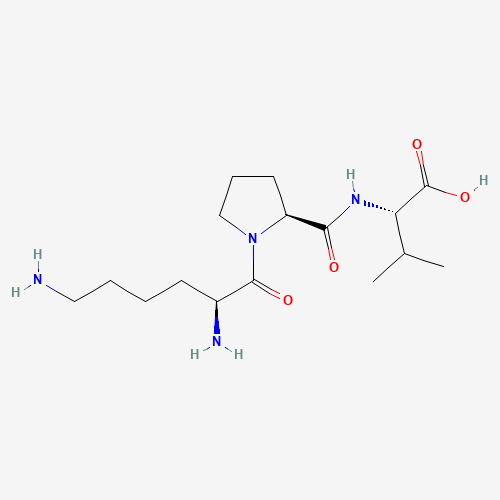
The free-acid form, H-Lys-Pro-Val-OH at 342.44 grams per mole, is the molecule in the Hiltz and Lipton 1989 origin paper and in the Dalmasso 2008 colitis program. The roughly 42-dalton difference between the two forms is the practical disambiguator, and confirming the molecular weight against the intended form is the single most useful check a researcher can run on a KPV certificate of analysis.
Receptor Context: Why KPV Acts Without the Melanocortin Pharmacophore
The full α-MSH parent is a tridecapeptide that binds the melanocortin receptors MC1R, MC3R, MC4R, and MC5R. Recognition runs through the central His-Phe-Arg-Trp tetrapeptide at residues 6 to 9, the pharmacophore that engages the receptor and raises intracellular cAMP. KPV is the C-terminal tail. It does not contain His-Phe-Arg-Trp.
The clearest test of what that structural difference means came from Getting and colleagues in 2003[2]. The group compared core α-MSH peptides, which carry the His-Phe-Arg-Trp motif, against the C-terminal KPV fragment in a mouse peritonitis preparation.
The core peptides activated macrophages through melanocortin receptors and raised cAMP. KPV did not raise cAMP, consistent with an absence of melanocortin-receptor-coupled signaling, yet it reduced immune-cell accumulation comparably. The authors concluded that KPV is unlikely to act through melanocortin receptors.
Brzoska, Böhm, Lügering, Loser, and Luger consolidated that position in a 2010 review, framing KPV as a fragment that lacks the entire receptor-binding motif while retaining anti-inflammatory capacity[3]. The framing matters because it severs an inference that vendor copy makes routinely. Findings about full α-MSH, including its melanocortin-receptor pharmacology, do not transfer to the tripeptide by default.
The most mechanistically explicit account of how KPV acts is Land 2012[4]. Working in human bronchial epithelial cells, Land reported that KPV moved into the cell nucleus and competed for importin-α3 binding with the NF-κB p65 subunit, blocking p65 nuclear import without acting on the upstream IκB kinase step. The downstream readout was reduced transcription of NF-κB target genes after inflammatory challenge.
This is distinct from canonical NF-κB inhibitors that act on the kinase complex, and distinct from melanocortin-receptor signaling. Whether every reported KPV effect rests on this same importin-α3 mechanism, or whether several mechanisms converge on a similar NF-κB readout, has not been resolved by side-by-side comparison.
The PepT1 Pathway: How an Oral Tripeptide Reaches Inflamed Tissue
The feature that distinguishes KPV from most research peptides is a credible route to oral bioavailability. Dalmasso and colleagues at Emory reported in 2008 that KPV is transported into intestinal epithelial cells by PepT1, the di- and tripeptide transporter encoded by SLC15A1[5]. In Caco-2 intestinal cell preparations, human PepT1 transported KPV with a Michaelis constant of roughly 160 micromolar, among the higher-affinity values reported for PepT1 substrates.
PepT1 is the mechanistic hook. The transporter is normally concentrated in the small intestine, but it is inducibly expressed in inflamed colonic epithelium during inflammatory bowel disease. In the Dalmasso account, that pattern means an orally administered peptide could be drawn preferentially into exactly the tissue where inflammation is highest. The paper reported that KPV reaching intestinal epithelial and immune cells suppressed NF-κB activation and lowered pro-inflammatory cytokine secretion in those cells.
This is the part of the KPV story that vendor pages gesture at when they describe an oral peptide that "survives digestion," usually without naming the transporter. The transporter is the mechanism. It is also a mechanism characterized in cell-culture and rodent systems, not in quantified human oral-bioavailability studies, a distinction the Research Limitations section returns to.
Preclinical Evidence: Intestinal and Colitis Models
The strongest body of preclinical work on KPV sits in murine acute colitis. Dalmasso and colleagues reported in 2008 that oral KPV, delivered in drinking water, reduced disease-activity score, attenuated colonic shortening, and lowered pro-inflammatory cytokine expression in both dextran-sulfate-sodium and TNBS colitis preparations in mice[5]. The same paper established PepT1 as the route by which the orally delivered peptide reached the target tissue.
Kannengiesser and colleagues at the University of Münster independently reported anti-inflammatory observations for melanocortin-derived KPV in murine inflammatory bowel disease preparations in the same year[6]. That cross-institutional replication, from a laboratory outside the Emory group, is one of the cleaner corroborations in the KPV literature, and it matters precisely because so much of the rest of the evidence base is concentrated.
Xiao and colleagues at Emory extended the program in 2017 through delivery optimization[7]. The group reported that hyaluronic-acid-functionalized nanoparticles carried KPV to colonic macrophages and epithelial cells, with anti-inflammatory observations in a murine colitis model at far lower nominal peptide quantities than free KPV required. The work is a formulation advance rather than a new mechanism, and it remains within the same Emory research axis.
One observation complicates the tidy version of this story. Viennois and colleagues, working in the same Emory laboratory, reported that PepT1 itself has a role in colitis-associated cancer in murine models, even as KPV exerted anti-inflammatory effects through the same transporter. The two findings are not contradictory, but they are not fully reconciled in the published record, and the complication is absent from every commercial page that markets KPV for gut inflammation.
Preclinical Evidence: Skin, Airway, and the KdPT Distinction
The dermatologic literature is where KPV began. The Hiltz and Lipton 1989 origin paper used a picryl-chloride contact-dermatitis ear-swelling model in mice as the readout, and reported that graded amounts of synthetic α-MSH residues 11 to 13 reduced ear-swelling in a dose-dependent fashion[1]. That result identified the C-terminal tripeptide as a candidate minimal anti-inflammatory sequence of the parent hormone.
The Münster dermatology group expanded the work substantially. Brzoska and colleagues authored a 2008 Endocrine Reviews treatment of α-MSH and related tripeptides covering biochemistry and anti-inflammatory observations in vitro and in vivo, with emphasis on skin and immune-mediated inflammation[8]. Luger and Brzoska framed the broader α-MSH-related class as candidate anti-inflammatory and immunomodulating agents in a 2007 review[9].
A frequent point of confusion deserves a flag. KdPT, the peptide Lys-D-Pro-Thr, is a different molecule from KPV and is sometimes conflated with it in vendor literature. KdPT was developed by the Münster group as a D-proline-substituted analog with a different proposed mechanism, acting on IL-1 receptor signaling rather than on importin-α3 nuclear import, and Mykicki and colleagues reported its activity in psoriasis-like skin inflammation in 2017[10]. KPV and KdPT share a family resemblance and a literature, but they are not the same compound.
The airway evidence is thinner and rests largely on the Land 2012 paper already described, which characterized the importin-α3 mechanism in human bronchial epithelial cells[4]. In-vivo airway-inflammation efficacy data for KPV are sparse, and the Land finding has not, to the present authors' knowledge, been independently replicated outside that laboratory in a separate human bronchial cell system. The Catania and colleagues 2004 review in Pharmacological Reviews places KPV within the broader anti-inflammatory melanocortin program and is a useful map of the older literature[11].
Clinical Evidence: No Human Trials
The clinical section is short because the clinical record is empty. As of May 2026, no peer-reviewed Phase 1, Phase 2, or Phase 3 randomized controlled trial of KPV peptide for any indication has been published. A search of ClinicalTrials.gov for KPV as an investigational product returns no registered trial; substring matches on unrelated sponsor or institution names exist, but no primary KPV trial is registered.
Every claim about KPV in humans, therefore, is an extrapolation from animal and cell-culture data. The colitis evidence is murine, the mechanism evidence in vitro, the dermatitis evidence rodent. None of it establishes a human dose, a human safety profile, or a human efficacy outcome, and the published literature does not support statements that frame KPV as a treatment for any human condition.
Research Limitations: Four Load-Bearing Critiques
The KPV evidence base is more credible than some research-peptide literatures and thinner than its commercial promotion implies. Four critiques sit at the load-bearing level.
First, the full-α-MSH-to-KPV inferential bridge is overused in derivative writing. The origin paper, the PepT1 paper, and the importin-α3 paper all specifically used the three-residue tripeptide. Many secondary reviews and most vendor pages carry findings about the full hormone, including its melanocortin-receptor pharmacology, into claims about the fragment, despite the fragment lacking the receptor-binding motif. The receptor-independence reported by Getting 2003 is the reason that bridge does not hold[2].
Second, the primary literature is concentrated in a small number of laboratories. Three institutional axes dominate: the Lipton and Catania origin work at UT Southwestern and later institutions, the Merlin group at Emory that owns the PepT1 and oral-colitis subliterature, and the Luger and Brzoska group at Münster that owns the dermatology and NF-κB work, with a smaller airway cluster around Land. This concentration is less extreme than the single-laboratory dominance seen for some other research peptides, but it is more concentrated than the literature on well-characterized approved drugs, and independent replication outside these axes is limited.
Third, the PepT1 oral-bioavailability mechanism is credible but quantitatively incomplete. The transporter affinity was characterized in cell culture, and the inducible colonic expression in rodent models. Published quantitative oral-bioavailability data for KPV in humans are absent. The native peptide is also chemically labile: it is degraded toward its constituent residues under protease challenge in vitro within roughly a day, with a lysine-proline diketopiperazine reported as a major degradation product[12].
Fourth, the inflammation-and-cancer relationship around PepT1 is unresolved. The same transporter that delivers KPV to inflamed colon has itself been implicated in colitis-associated cancer in murine models. That does not make KPV harmful, and it does not make it beneficial; it means the biology of the delivery pathway is more complicated than the marketing suggests, and that complexity belongs in any honest reading of the evidence.
None of these critiques falsifies the KPV anti-inflammatory observations. Each describes the current grade and reach of the evidence. A rigorous reading weights the preclinical-only status, the citation concentration, and the absence of human data accordingly.
Regulatory Context: Removed From Category 2, Under PCAC Review
The U.S. Food and Drug Administration has not evaluated KPV for any indication. KPV was placed on the FDA 503A Category 2 list, the do-not-compound designation for bulk drug substances, in 2023. On April 22, 2026, the FDA removed KPV from Category 2 as one of a twelve-peptide reclassification cohort that also included BPC-157, LL-37, DSIP, Epitalon, GHK-Cu injectable, MOTS-c, Melanotan II, PEG-MGF, Semax, TB-500, and DiHexa.
Removal from Category 2 is not the same as approval. It does not place KPV on the Category 1 positive list, and it does not make the compound eligible for pharmacy compounding.
The Pharmacy Compounding Advisory Committee reviewed KPV, in both free-base and acetate forms, on July 23, 2026, the first day of a two-day docket that also covered BPC-157, TB-500, and MOTS-c. The proposed framing in the FDA notice referenced wound-healing and inflammatory conditions. The Committee recommended KPV for the 503A bulks list by a vote of 8 to 6 with one abstention, against FDA staff's written position that it not be added; the staff review had identified no human studies supporting the nominated indication, which is consistent with the literature described above.
That recommendation does not change KPV's legal status. Notice-and-comment rulemaking would still be required before the compound became eligible for compounding, and the FDA is not bound by the Committee. The full outcome across all seven substances is covered in our report on the July 2026 PCAC vote.
The compound's posture under federal law, in the meantime, is unapproved new drug, lawful only for research-use-only sale to qualified researchers. KPV is not named explicitly on the World Anti-Doping Agency 2026 Prohibited List, though the S0 catch-all clause for non-approved substances may apply at competition control.
For the catalog entry, current chemistry, and certificate-of-analysis detail, see the KPV product page. For the broader compounding framework that governs the July 2026 review, see 503A vs 503B compounding.
References
-
Hiltz ME, Lipton JM. Antiinflammatory activity of a COOH-terminal fragment of the neuropeptide alpha-MSH. FASEB J. 1989;3(11):2282-2284. PMID: 2550304.
-
Getting SJ, Schiöth HB, Perretti M. Dissection of the anti-inflammatory effect of the core and C-terminal (KPV) alpha-melanocyte-stimulating hormone peptides. J Pharmacol Exp Ther. 2003;306(2):631-637. PMID: 12750433.
-
Brzoska T, Böhm M, Lügering A, Loser K, Luger TA. Terminal signal: anti-inflammatory effects of alpha-melanocyte-stimulating hormone related peptides beyond the pharmacophore. Adv Exp Med Biol. 2010;681:107-116. PMID: 21222263.
-
Land SC. Inhibition of cellular and systemic inflammation cues in human bronchial epithelial cells by melanocortin-related peptides: mechanism of KPV action and a role for MC3R agonists. Int J Physiol Pathophysiol Pharmacol. 2012;4(2):59-73. PMID: 22837805.
-
Dalmasso G, Charrier-Hisamuddin L, Nguyen HTT, Yan Y, Sitaraman S, Merlin D. PepT1-mediated tripeptide KPV uptake reduces intestinal inflammation. Gastroenterology. 2008;134(1):166-178. PMID: 18061177.
-
Kannengiesser K, Maaser C, Heidemann J, et al. Melanocortin-derived tripeptide KPV has anti-inflammatory potential in murine models of inflammatory bowel disease. Inflamm Bowel Dis. 2008;14(3):324-331. PMID: 18092346.
-
Xiao B, Xu Z, Viennois E, et al. Orally targeted delivery of tripeptide KPV via hyaluronic acid-functionalized nanoparticles efficiently alleviates ulcerative colitis. Mol Ther. 2017;25(7):1628-1640. PMID: 28143741.
-
Brzoska T, Luger TA, Maaser C, Abels C, Böhm M. Alpha-melanocyte-stimulating hormone and related tripeptides: biochemistry, antiinflammatory and protective effects in vitro and in vivo, and future perspectives for the treatment of immune-mediated inflammatory diseases. Endocr Rev. 2008;29(5):581-602. PMID: 18612078.
-
Luger TA, Brzoska T. alpha-MSH related peptides: a new class of anti-inflammatory and immunomodulating peptides. Ann Rheum Dis. 2007;66 Suppl 3:iii52-iii55. PMID: 17934096.
-
Mykicki N, Klenner L, Baumann C, et al. The tripeptide KdPT ameliorates ongoing psoriasis-like skin inflammation in murine and human skin. Exp Dermatol. 2017;26(4):328-334. PMID: 27376341.
-
Catania A, Gatti S, Colombo G, Lipton JM. Targeting melanocortin receptors as a novel strategy to control inflammation. Pharmacol Rev. 2004;56(1):1-29. PMID: 15001661.
-
Russo R, Cassiano C, Carabetta A, et al. Reductive glycoalkylation of the lysine residue in tripeptide KPV: stability characterization of the native peptide. Bioorg Med Chem. 2018;26(8):1759-1768. PMID: 29472036.
-
ClinicalTrials.gov registry search for "KPV" as investigational product, verified May 2026. No Phase 1, Phase 2, or Phase 3 trial of KPV (Lys-Pro-Val tripeptide) for any indication is identifiable.
-
Frier Levitt. FDA removes 12 peptides from 503A Category 2 (do-not-compound list), schedules July 23, 2026 PCAC review. April 2026.
-
World Anti-Doping Agency. 2026 Prohibited List. International Standard, effective January 1, 2026.
Not intended to diagnose, treat, cure, mitigate, or prevent any disease. Sold for research, laboratory, or analytical purposes only.
Research Compounds Referenced
The compounds discussed in this article are sold by Peerless Peptides for laboratory research use only. They are not FDA-approved for human or veterinary administration. Per-batch Certificates of Analysis are available.
- KPV: α-MSH 11-13 tripeptide, C-terminal fragment Lys-Pro-Val.PDP entry →
Frequently Asked Questions
- What is KPV peptide?
- KPV is a synthetic three-amino-acid peptide with the sequence Lys-Pro-Val (single-letter KPV), molecular formula C16H30N4O4, molecular weight 342.44 g/mol, CAS number 67727-97-3, and PubChem CID 125672. It corresponds to the C-terminal tripeptide of α-melanocyte-stimulating hormone (α-MSH), residues 11 to 13 of the 13-amino-acid parent hormone. The molecule was first characterized by Marlene Hiltz and James Lipton at UT Southwestern in a 1989 FASEB Journal paper as the minimal C-terminal fragment that retained anti-inflammatory activity in a mouse contact-dermatitis model. The published research literature is preclinical: murine colitis preparations, in vitro keratinocyte and bronchial-epithelial systems, and rodent contact-dermatitis assays.
- What does KPV peptide do in research models?
- Across published preclinical systems, KPV has been investigated as an anti-inflammatory fragment of α-MSH. In murine dextran-sulfate-sodium and TNBS colitis preparations, oral KPV was reported to lower disease-activity scores and pro-inflammatory cytokine expression. In human bronchial epithelial cells and intestinal epithelial cells, KPV was reported to suppress NF-κB-driven cytokine output after inflammatory challenge. These are observations in animal and cell-culture systems. No human efficacy or safety has been established, and KPV is sold for laboratory research use only.
- How is KPV different from the parent α-MSH peptide?
- The full α-MSH parent is a 13-residue acetylated, amidated peptide that binds melanocortin receptors (MC1R, MC3R, MC4R, MC5R) through the central His-Phe-Arg-Trp tetrapeptide at residues 6 to 9, engaging cAMP signaling. KPV contains only the C-terminal Lys-Pro-Val tripeptide and does not include that His-Phe-Arg-Trp pharmacophore. The primary literature reports that KPV does not elevate cAMP and acts independently of melanocortin-receptor signaling. The two molecules are pharmacologically distinct, and findings about the full hormone do not automatically transfer to the fragment.
- Why does the molecular weight on a KPV certificate of analysis matter?
- Two distinct molecules circulate under the KPV label. The free-acid form H-Lys-Pro-Val-OH (CAS 67727-97-3, molecular weight 342.44 g/mol, PubChem CID 125672) is the form used in the 1989 origin paper and the 2008 colitis program. A separate N-acetylated, C-amidated form Ac-Lys-Pro-Val-NH2 (CAS 112965-21-6, molecular weight approximately 384.48 g/mol) appears in some structure-activity work. The roughly 42-dalton mass difference is the cleanest way to tell the two apart on a certificate of analysis. KPV also contains no aromatic residues, so HPLC purity reported at the familiar 280-nanometer wavelength is invalid for this compound; 210 to 220 nanometers is the correct detection range.
- Is KPV peptide approved by the FDA?
- No. KPV is sold strictly for laboratory research use only and is not approved by the FDA for any human or veterinary indication. KPV was placed on the FDA 503A Category 2 do-not-compound list in 2023 and was removed from Category 2 effective April 22, 2026 as one of a 12-peptide reclassification cohort. Removal from Category 2 does not confer Category 1 status or compoundability. The FDA Pharmacy Compounding Advisory Committee reviewed KPV on July 23, 2026 and recommended it for the 503A bulks list, 8 to 6 with one abstention, against FDA staff's written position. That recommendation is advisory; notice-and-comment rulemaking would still be required before KPV became eligible for compounding.