

Quality Standards
American Owned
Mixed, bottled, and tested in the USA
Third-Party Tested
Independently tested for purity and quality
>99% Purity
Exceptional purity you can trust
Also Screened For
Endotoxins + Heavy Metals
Beyond the identity, purity & sterility panel.
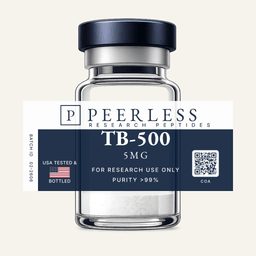
TB-500
Synthetic heptapeptide Ac-LKKTETQ, residues 17-23 of thymosin beta-4 more info
Available for laboratory research use only.
Quality Standards
American Owned
Mixed, bottled, and tested in the USA
Third-Party Tested
Independently tested for purity and quality
>99% Purity
Exceptional purity you can trust
Also Screened For
Endotoxins + Heavy Metals
Beyond the identity, purity & sterility panel.
Vial size
Choose your supply
3 vials· 30mg total
Save $11.25 (5% off)
Total
$213.75
Volume pricing applies to your total vials, not just this product. Mix or match any vials in your cart to reach the next tier.
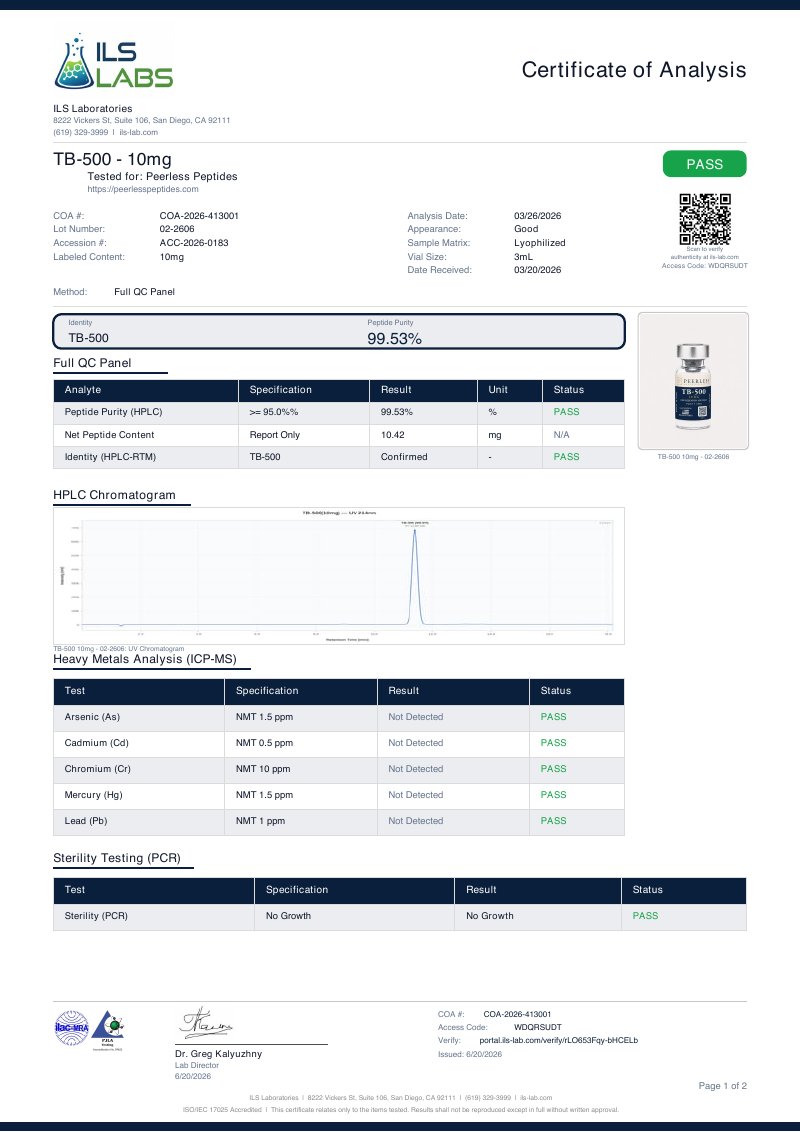
Independent Lab Results
The most comprehensive testing panel in research peptide commerce. Every batch is independently verified by ILS Laboratories — an ISO/IEC 17025 and PJLA-accredited facility in San Diego, CA.
- Identity
- Purity (HPLC)
- Endotoxin (USP <85>)
- Sterility screen (PCR)
- Heavy metals (ICP-MS per USP <233>)
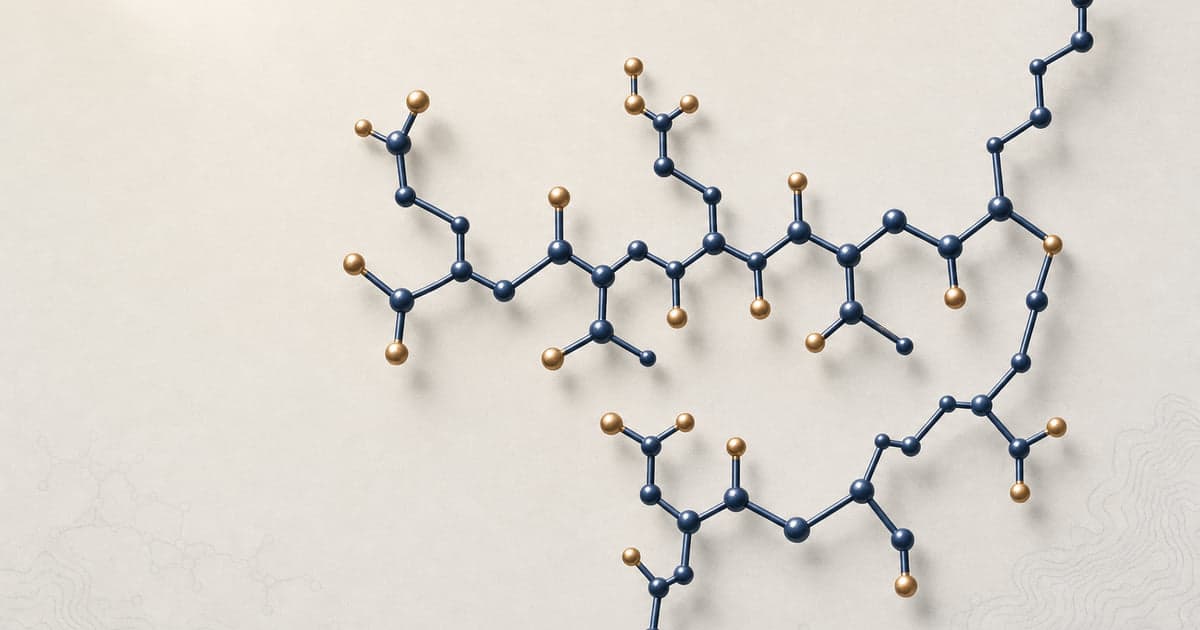
Biochemical Profile
- CAS Number
- 885340-08-9
- Molecular Formula
- C38H68N10O14
- Molecular Weight
- 889.02 g/mol
- Purity
- >99% (HPLC-UV (214-220 nm))
- PubChem CID
- 62707662
- Amino Acid Sequence
- Ac-Leu-Lys-Lys-Thr-Glu-Thr-Gln
Receptor Targets and Signaling Pathway Context
TB-500 has been investigated as a fragment of the intrinsically disordered parent protein thymosin beta-4 (Tβ4), which has its own well-characterized molecular pharmacology in actin sequestration. The strongest mechanistic finding in the broader Tβ4 literature is 1:1 binding of monomeric ATP-G-actin via the LKKTET motif located at residues 17-22 of the parent protein, with affinity in the sub-micromolar range[1][2].
In endothelial-cell preparations, the LKKTETQ 7-mer and full Tβ4 have been reported to display comparable activity at sub-micromolar concentrations in cell-migration and aortic-ring sprouting assays[3]. This is the single most-cited piece of published evidence supporting equivalence between the 7-mer and the full parent protein in any biological readout.
The broader Tβ4 literature has characterized full-length Tβ4 effects on the integrin-linked kinase (ILK) and Akt signaling axis in rodent cardiac models[4]. Direct head-to-head studies establishing that the 7-mer recapitulates these and other full-Tβ4 mechanisms outside of dermal wound healing and endothelial migration have not been published in the peer-reviewed literature as of May 2026.
The receptor-binding profile of the LKKTETQ 7-mer has not been fully characterized in human tissue. Published human pharmacokinetic data exist for full-length Tβ4 administered intravenously to healthy volunteers[5] but not for the 7-mer. A Phase 1/2 study (Hudson Biotech) is the first US-sponsored human trial using the LKKTETQ 7-mer by name; results are pending as of May 2026[6].
Research Applications
Cytoskeletal and Actin Sequestration Research
Tβ4 is the principal G-actin-sequestering protein in most metazoan cells, forming 1:1 complexes with monomeric ATP-G-actin and preventing polymerization to F-actin[1].
The actin-binding motif maps to residues 17-22 of the parent protein (LKKTET); X-ray crystallography demonstrated that essentially the entire 43-residue Tβ4 chain wraps the actin monomer in solution, with LKKTET as the high-affinity contact region[2]. The LKKTETQ 7-mer reproduces the actin-binding contact but lacks the N-terminal and C-terminal flanking regions present in the full parent.
Sosne et al. mapped biological activities to short peptide sequences within Tβ4, identifying multiple distinct active sites distributed across the parent protein[7]. The actin-sequestration biology is the most reproducibly characterized feature of the Tβ4 literature; regenerative biology attributed to the parent protein has been more variable across replication attempts.
Wound and Skin Research
Cutaneous wound preparations have been a sustained focus across the Tβ4 literature. Malinda et al. reported that intraperitoneal full-length Tβ4 administration was associated with re-epithelialization markers in rat dorsal punch-wound preparations[8].
The single most-cited direct comparison between the full 43-mer and the LKKTETQ 7-mer is Philp et al. (2003) in db/db diabetic and aged-mouse dermal wound models, which reported observations on epithelial repair markers in aged animals[9]. This paper from the Goldstein/Kleinman collaboration is the foundation of the commercial premise that the 7-mer recapitulates full-Tβ4 dermal-wound activity. It is one small-animal study restricted to dermal wound models in mice; whether the 7-mer recapitulates full-Tβ4 activity in corneal, cardiac, or other indications has not been independently established in the published literature.
Crockford et al. reviewed the broader Tβ4 dermal program from the RegeneRx pipeline perspective, summarizing preclinical findings and pipeline development priorities[10].
Corneal and Ocular Research
Corneal-wound and ocular-surface preparations have been the most extensively developed clinical application area for full-length Tβ4. Sosne et al. (2002) reported observations on rat corneal wound markers following alkali injury, framing the work in terms of inflammation-modulation and epithelial migration[11].
Sosne et al. (2015) summarized the Phase 2 ophthalmic dry-eye clinical program (RGN-259), preceding the Phase 3 ARISE program[12]. The RGN-259 Phase 3 ophthalmic program comprises three pre-specified pivotal trials in dry-eye disease (ARISE-1 with 317 participants, ARISE-2 with 601, ARISE-3 with 700, all completed) and additional trials in neurotrophic keratopathy (the SEER program). As publicly disclosed by the trial sponsors, every Phase 3 trial in this program missed its pre-specified primary endpoint; the ARISE-3 readout in March 2021 reported no statistically significant difference from placebo vehicle.
All ocular Tβ4 clinical trials used the full-length 43-mer parent protein, not the LKKTETQ 7-mer.
Cardiac and Cardiovascular Research
Cardiac research has been a major focus of the academic literature on Tβ4 and is where the strongest independent contradictions have been published. Bock-Marquette et al. reported that intraperitoneal full-length Tβ4 administration in a mouse coronary-ligation model was associated with upregulation of integrin-linked kinase (ILK) activity, Akt phosphorylation, and cardiac function readouts[4].
Smart et al. extended this work with reports of epicardial-derived cell mobilization and adult cardiomyocyte transdifferentiation claims[13][14]. Two independent replication attempts contradicted the headline findings. Zhou et al. (2012) reported that full-length Tβ4 administration after myocardial infarction did not reprogram epicardial cells into cardiomyocytes in lineage-tracing experiments[15]. Banerjee et al. (2012) reported that global and cardiac-specific Tβ4 knockout mice are born at Mendelian ratios with normal heart and coronary vessel development, indicating Tβ4 is dispensable for murine cardiac development[16].
Independent replication of the regenerative cardiac findings remains contested in the published literature. As of May 2026, no Phase 3 cardiac efficacy trial of either the 7-mer or full Tβ4 has been completed.
Tendon, Muscle, and Neurological Research
Tendon, muscle, and central nervous system applications are heavily emphasized in commercial Tβ4 and TB-500 marketing but are the thinnest in the primary published literature for the LKKTETQ 7-mer specifically.
In tendon-injury preparations, foundational work has used the full parent protein in rodent models of medial collateral ligament injury and Achilles transection; the literature does not include a peer-reviewed primary study using the isolated LKKTETQ 7-mer in rodent tendon preparations as of May 2026. In neurological research, in-vivo CNS preparations of stroke (middle cerebral artery occlusion), traumatic brain injury (controlled cortical impact, fluid percussion), and spinal-cord injury have used full-length Tβ4. Independent validation of CNS effects using the 7-mer has not been published.
The Sosne et al. short-peptide active-site mapping study identified discrete biological activities within the parent sequence[7]; whether the LKKTETQ fragment alone reproduces the full Tβ4 activity profile across non-dermal indications is an open research question.
Clinical Development Status
The Tβ4 clinical development record spans approximately 25 years, primarily driven by RegeneRx Biopharmaceuticals and its development partners ReGenTree, Lee's Pharmaceutical (Hong Kong), and others. The major Phase 3 ophthalmic program (RGN-259) comprises four completed Phase 3 trials, all of which missed their pre-specified primary endpoints (the ARISE-1, ARISE-2, ARISE-3 dry-eye trials and the SEER-3 European neurotrophic-keratopathy trial). The cardiac IV program (RGN-352) was placed on FDA clinical hold in March 2011 for cGMP non-compliance and never enrolled patients. The dermal Phase 3 program for RGN-137 (epidermolysis bullosa topical gel) was cleared by FDA in February 2017 but has not produced a published Phase 3 readout as of May 2026.
RegeneRx itself filed SEC Form 15 in August 2023, terminating its public-company reporting obligations following the lead-asset trial failures and a 1-for-100 reverse stock split.
A separate Phase 1/2 study sponsored by Hudson Biotech is the first publicly registered US trial using the LKKTETQ 7-mer by name, in stable atherosclerotic cardiovascular disease with cardiovascular-biomarker endpoints (recruiting as of May 2026)[6]. Results have not been published. Ruff et al. (2010) reported Phase 1 pharmacokinetic and safety data for intravenous full-length Tβ4 in healthy volunteers; comparable pharmacokinetic data for the 7-mer have not been published[5].
Research Literature
Published literature reviews from the Peerless research desk that reference TB-500.
Handling & Storage
- Storage (lyophilized)
- -20°C, dry, dark
- Storage (in solution)
- 2-8°C, use within 28 days
- Shelf Life
- 24 months lyophilized
Research References
- [1] Safer D, Elzinga M, Nachmias VT. Thymosin β4 and Fx, an actin-sequestering peptide, are indistinguishable. J Biol Chem. 1991;266(7):4029-4032. PMID:1996337
- [2] Irobi E, Aguda AH, Larsson M, et al. Structural basis of actin sequestration by thymosin-β4: implications for WH2 proteins. EMBO J. 2004;23(18):3599-3608. PMID:15329672
- [3] Philp D, Huff T, Gho YS, Hannappel E, Kleinman HK. The actin binding site on thymosin β4 promotes angiogenesis. FASEB J. 2003;17(14):2103-2105. PMID:14500546
- [4] Bock-Marquette I, Saxena A, White MD, Dimaio JM, Srivastava D. Thymosin β4 activates integrin-linked kinase and promotes cardiac cell migration, survival and cardiac repair. Nature. 2004;432(7016):466-472. PMID:15565145
- [5] Ruff D, Crockford D, Girardi G, Zhang Y. A randomized, placebo-controlled, single and multiple dose study of intravenous thymosin β4 in healthy volunteers. Ann N Y Acad Sci. 2010;1194:223-229. PMID:20536472
- [6] Hudson Biotech. TB-500 (17-23 fragment) for cardiovascular biomarkers in stable atherosclerotic cardiovascular disease. ClinicalTrials.gov Identifier: NCT07487363 (Phase 1/2, recruiting; 80 estimated participants; verified 2026-05-19).
- [7] Sosne G, Qiu P, Goldstein AL, Wheater M. Biological activities of thymosin β4 defined by active sites in short peptide sequences. FASEB J. 2010;24(7):2144-2151. PMID:20179146
- [8] Malinda KM, Sidhu GS, Mani H, et al. Thymosin β4 accelerates wound healing. J Invest Dermatol. 1999;113(3):364-368. PMID:10469335
- [9] Philp D, Badamchian M, Scheremeta B, et al. Thymosin β4 and a synthetic peptide containing its actin-binding domain promote dermal wound repair in db/db diabetic mice and in aged mice. Wound Repair Regen. 2003;11(1):19-24. PMID:12581423
- [10] Crockford D, Turjman N, Allan C, Angel J. Thymosin β4: structure, function, and biological properties supporting current and future clinical applications. Ann N Y Acad Sci. 2010;1194:179-189. PMID:20536450
- [11] Sosne G, Szliter EA, Barrett R, Kernacki KA, Kleinman H, Hazlett LD. Thymosin β4 promotes corneal wound healing and decreases inflammation in vivo following alkali injury. Exp Eye Res. 2002;74(2):293-299. doi:10.1006/exer.2001.1125
- [12] Sosne G, Ousler GW. Thymosin β4 ophthalmic solution for dry eye: a randomized, placebo-controlled, Phase II clinical trial conducted using the controlled adverse environment (CAE) model. Clin Ophthalmol. 2015;9:877-884. PMID:25826322
- [13] Smart N, Risebro CA, Melville AAD, et al. Thymosin β4 induces adult epicardial progenitor mobilization and neovascularization. Nature. 2007;445(7124):177-182. PMID:17495252
- [14] Smart N, Bollini S, Dubé KN, et al. De novo cardiomyocytes from within the activated adult heart after injury. Nature. 2011;474(7353):640-644. PMID:21654746
- [15] Zhou B, Honor LB, Ma Q, et al. Thymosin beta 4 treatment after myocardial infarction does not reprogram epicardial cells into cardiomyocytes. J Mol Cell Cardiol. 2012;52(1):43-47. PMID:21907210
- [16] Banerjee I, Zhang J, Moore-Morris T, et al. Cytoskeletal protein thymosin β4 is dispensable for murine cardiac development and function. Circ Res. 2012;110(3):456-464. PMID:22158707
Scientific Journal Author
Allan L. Goldstein, PhD
Landmark Publications
- Low TL, Hu SK, Goldstein AL. Complete amino acid sequence of bovine thymosin β4. Proc Natl Acad Sci USA. 1981;78(2):1162-1166. (PMID 6940133)
- Goldstein AL, Hannappel E, Sosne G, Kleinman HK. Thymosin β4: a multi-functional regenerative peptide. Basic properties and clinical applications. Expert Opin Biol Ther. 2012;12(1):37-51.
- Sosne G, Qiu P, Goldstein AL, Wheater M. Biological activities of thymosin β4 defined by active sites in short peptide sequences. FASEB J. 2010;24(7):2144-2151.
Dr. Goldstein is independently cited here as the co-originating researcher of the thymosin family of peptides at George Washington University. There is no affiliation or commercial relationship between Dr. Goldstein, The George Washington University, and Peerless Peptides.