
Peerless Research·bpc-157
BPC-157: A Literature Review of the Pentadecapeptide Evidence
BPC-157 is a synthetic 15-amino-acid peptide with a large rat-model literature, a single-laboratory citation network, and minimal human evidence.
BPC-157 is the most-searched research peptide that almost nobody can describe correctly. Its name, Body Protection Compound, points to a protein that has never been sequenced. Its reputation rests on tendon and gut studies in rats, run overwhelmingly by a single laboratory. Its published half-life is measured in minutes.
None of that makes the molecule inert. It makes it unusually easy to misstate, because almost every confident claim in circulation quietly moves a finding from a rat model to a human, or from one laboratory to "the literature." This review reads the BPC-157 record on its own terms, and keeps the animal data and the human data in separate columns.
What follows is a map of the chemistry, the mechanism proposals, the preclinical evidence, the near-empty clinical record, and the methodology problems any peer reviewer would flag first.
Research content. The article below summarizes published preclinical, in vitro, and limited human research literature on BPC-157 (Body Protection Compound 157, pentadecapeptide BPC 157). The compound is sold by Peerless Peptides for laboratory research use only and is not approved by the FDA for human or veterinary administration.
Last reviewed: June 10, 2026 by Peerless Research.
Summary
BPC-157 is a synthetic 15-amino-acid peptide first reported by the Sikirić group at the University of Zagreb in 1991-1993 and described as a fragment of a protein isolated from human gastric juice. It has been investigated across roughly seven rat-model systems, with consistent reports of cytoprotective and tissue-repair effects. The published literature also carries six structural problems a reviewer would flag: the parent protein has never been sequenced; about 87% of indexed papers come from one laboratory; the originating investigator holds the active patent through a company he leads; the only independent pharmacokinetic study reports a plasma half-life of minutes; the foundational gastric-stability claim rests on a single 1995 conference abstract; and no mid-stage human efficacy trial has been published in 33 years.
The defensible verdict is not "a compound that was tried and failed." It is closer to "a compound that has rarely been tried by anyone other than its originators." The April 2026 reclassification did not change that evidence base, and the July 2026 advisory-committee review concerned a narrow indication, not the musculoskeletal-research interest that draws most attention to the molecule.
Note: the research described below was conducted in rat and mouse models, with one cancelled Phase I human safety study and one recruiting Phase 2 trial. Human safety and efficacy of this compound have not been established in any peer-reviewed randomized trial. This article is a literature review, not a recommendation of use.
Identity and Chemistry: A Peptide Without a Parent
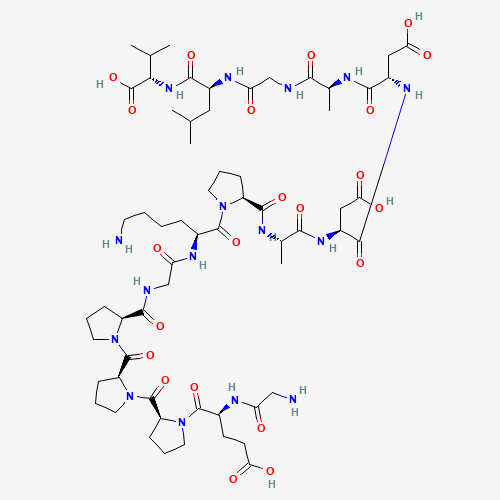
BPC-157 is a linear pentadecapeptide with the sequence Gly-Glu-Pro-Pro-Pro-Gly-Lys-Pro-Ala-Asp-Asp-Ala-Gly-Leu-Val (single-letter GEPPPGKPADDAGLV). Its molecular formula is C₆₂H₉₈N₁₆O₂₂, molecular weight 1419.54 daltons, CAS number 137525-51-0, PubChem CID 9941957. It has no post-translational modifications, no disulfide bonds, and no aromatic residues, which is why a valid purity reading must be taken by reversed-phase HPLC at 214-220 nanometers rather than 280. Full identifiers and per-batch certificates are on the BPC-157 product page.
The first discipline BPC-157 demands is about its origin. The acronym stands for "Body Protection Compound," and the foundational paper described BPC-157 as a fragment of a larger protein "isolated from human gastric juice"[1]. The larger protein is the problem: no molecular weight, no sequence, no Edman degradation result, no mass-spectrometry-confirmed source, and no UniProt entry has ever been published for it. The "~40 kDa" figure repeated in popular accounts cannot be traced to a primary publication.
In early 2026 this moved from an absence to a positive finding. Jong-Hwei Su Pang of Chang Gung University in Taiwan, the senior author on the most-cited non-Zagreb mechanism papers, stated publicly that the BPC-157 amino-acid sequence does not appear in the human reference proteome, a claim reported by STAT News and Undark. PubChem lists the molecule as a synthetic pentadecapeptide and links it to no protein accession.
The accurate description is narrow: a synthetic 15-amino-acid peptide first reported in 1993 as derived from human gastric juice, whose parent protein has not been sequenced and whose sequence does not appear in the human proteome. The common framing of BPC-157 as a "naturally occurring fragment of a human protein" is not supported by primary literature. Even the numeric suffix is undocumented; whether "157" denotes a residue position or an internal compound-library index has never been stated in the source papers.
One chemistry detail matters for anyone evaluating a certificate of analysis. The adjacent aspartate residues at positions 10 and 11 are aspartimide-prone, and the resulting β-aspartyl isomers co-elute with the parent peptide on standard HPLC and share its mass. They hide inside the main peak and inflate apparent purity. No peer-reviewed paper or vendor certificate publishes a specific aspartimide percentage for commercial BPC-157, and no compendial (USP or EP) stability-indicating method exists, so cross-lot comparability rests on each supplier's ad-hoc gradient.
The Gastric-Stability Claim and Its Single Source
A second claim underwrites the entire oral-BPC-157 category: that the peptide is stable in human gastric juice for more than 24 hours, attributed to its run of three prolines. This is the load-bearing biochemistry behind every capsule and every "Pentadeca Arginate" product. It traces to one source, a 1995 conference-supplement abstract by Veljaca and colleagues on the digestion of growth factors and "BPC 15" in human gastric juice.
The qualifications are substantial. It is a conference abstract, not a full paper with methods and figures. The peptide was named "BPC 15" under an older convention, and its structural identity to modern BPC-157 is assumed rather than demonstrated in that source.
No subsequent peer-reviewed paper has re-measured BPC-157 degradation kinetics in gastric juice with quantitative time-courses, and no laboratory outside the originating circle has replicated the result in the three decades since. A claim repeated in dozens of downstream reviews rests on a single unreplicated abstract.
Mechanism: Proposals Without a Receptor
BPC-157 has no demonstrated receptor. As of 2026, no published study provides direct biophysical binding measurements, by surface plasmon resonance, isothermal calorimetry, or a co-structure, for BPC-157 to any target. The mechanism literature is therefore a set of pathway associations observed in cells and tissues, not receptor pharmacology.
The most-cited non-Zagreb mechanism work concerns angiogenesis. Hsieh and colleagues reported that BPC-157 exposure increased the expression of vascular endothelial growth factor receptor 2 (VEGFR2) and activated a downstream VEGFR2-Akt-eNOS signaling cascade in endothelial cells and a rat ischemia model, without raising VEGF-A itself[7]. Notably, the same work showed BPC-157 does not competitively displace VEGF from the receptor, so any interaction is indirect, allosteric, or mediated by receptor internalization rather than direct agonism.
The Chang Gung group separately reported that BPC-157 raised growth-hormone-receptor expression in cultured rat tendon fibroblasts[5]. These are the strongest non-originating mechanism findings, though later Chang Gung papers list the Zagreb investigators as co-authors, which blurs their independence.
The Zagreb corpus itself centers on nitric-oxide signaling. Across many rat lesion models, the group reports that BPC-157 counteracts both nitric-oxide blockade and nitric-oxide overload, framed as bidirectional modulation of the system rather than simple agonism[2]. The difficulty is that a mechanism reported to rescue opposite pharmacological conditions across many models is hard to falsify, and the finding has not been reproduced in mechanistic detail outside the originating laboratory. Further claims in the corpus, spanning dopaminergic and serotonergic modulation, neuroprotection, and cytoprotection generally[6], share the same evidentiary shape: observed effects in models, no receptor pharmacology.
Preclinical Evidence: Broad, Consistent, and Concentrated
The animal literature is genuinely large and unusually consistent in direction. It is also unusually concentrated in its source.
The founding application is gastrointestinal. Rat models of ethanol-induced gastric lesions, cysteamine duodenal ulcer, NSAID gastroenteropathy, and inflammatory-bowel analogs form the oldest and densest part of the record, and a development-stage formulation reached early clinical study as an inflammatory-bowel candidate[3]. From there the work fans out across tissue systems: Achilles tendon transection and tendon-to-bone models[4]; medial collateral ligament transection; rabbit bone-defect models; gastrocnemius crush and corticosteroid-impaired muscle; sciatic-nerve transection and several central-nervous-system injury models; and vascular ischemia preparations.
Two features qualify the whole body of work. First, the methods are modest in the way preclinical pharmacology often is: group sizes are typically five to ten animals per arm, the subjects are overwhelmingly male rats from a single institutional source, and blinding of outcome adjudication is not affirmatively stated in the abstracts of the principal studies. No formal risk-of-bias assessment of the corpus has been published. Second, the reported effect magnitudes are notably flat across exposures spanning two to three orders of magnitude; the originators read this as receptor saturation at the low end, while methodological critics read it as a design that rarely resolves a clean concentration-response curve.
The concentration is the larger issue, and it is quantifiable. Of roughly 200 BPC-157 papers indexed in PubMed, about 173, near 87%, list Predrag Sikirić or Sven Seiwerth as an author. The most recent independent syntheses of the field describe exactly this: a 2025 review by a Polish group at the Medical University of Warsaw was the first peer-reviewed survey of the literature written by authors outside the originating program[9], and 2025 reviews in the orthopaedic and sports-medicine literature reached the same conclusion, that the reported findings derive almost entirely from rodent work by a small set of collaborating laboratories[10][11].
Clinical Evidence: Thirty-Three Years, No Mid-Stage Trial
The clinical record is the most striking feature of the BPC-157 literature, because there essentially isn't one.
A development program existed. The Croatian firm Pliva carried BPC-157 under internal compound numbers and a brand name, completed a published Phase I in healthy volunteers, and ran a Phase II of an enema formulation for ulcerative colitis in the 2000s. The Phase II results were never published in any peer-reviewed journal, a point confirmed in 2026 investigative reporting.
After Pliva was acquired, by Barr and then Teva, the program was quietly shelved and never reappeared in any successor pipeline. The reason the mid-stage colitis data were never released has not been disclosed, and that absence is itself a data point.
The current registry is nearly bare. As of mid-2026, ClinicalTrials.gov lists two BPC-157 studies. The first, NCT02637284, was a 2015 Phase I in healthy volunteers sponsored by a vehicle associated with the originating investigator and run at a site in Tijuana; it was terminated and its data withdrawn before any external review. The second, NCT07437547, is a Phase 2 trial in acute hamstring strain sponsored by Hudson Biotech, with an estimated 120 participants, recruiting since February 2026. It is the first BPC-157 trial registered outside the originating orbit in 33 years, and the same sponsor is separately running the first trial of the adjacent compound TB-500. Beyond these, the human record is two small open-label pilots: a 2024 study of intravesical administration in 12 women with interstitial cystitis, without controls or blinding[12], and a 2025 intravenous safety pilot in two subjects[13].
Across 33 years since the foundational papers there are zero registered Phase 3 trials, zero IND-cleared US trials, and no published mid-stage efficacy data in any indication.
The Pharmacokinetic Contradiction
The single most useful number in the BPC-157 literature comes from the one pharmacokinetic study not authored by the originating group. Xu and colleagues, a Chinese pharmaceutical group, measured BPC-157 disposition in rats and beagle dogs[8]. The reported plasma half-life is on the order of 15 minutes after intravenous dosing in rats and about 5 minutes in dogs, with intramuscular values in the range of 8 to 30 minutes. Repeated dosing over seven days produced no accumulation; each administration was independently cleared.
The arithmetic is the point. With a half-life of minutes, plasma BPC-157 is effectively gone within roughly 12 hours of a dose, and by the time a daily regimen reaches its next administration, dozens of half-lives have elapsed. The exposure profile is a brief spike followed by long stretches of negligible concentration, with no depot and no steady state. The 2025 human intravenous pilot is consistent: concentrations returned to baseline within 24 hours.
This sits awkwardly against the molecule's reputation. If a sustained effect requires sustained receptor engagement, the published pharmacokinetics do not supply it; if the model is a brief pulse with durable downstream consequences, that model has not been articulated or tested. Because the contradicting data come from an independent pharmaceutical laboratory, the tension is difficult to set aside.
Research Limitations
Several limitations frame how the BPC-157 evidence should be weighted, and together they are the reason a careful reader holds the molecule at arm's length.
The first is the unidentified parent protein. Because the source protein has never been sequenced, there is no gene to target and therefore no possibility of the knockout experiment that would test causation directly. The standard tool of mechanism validation is structurally unavailable.
The second is the single-laboratory concentration. A literature in which one group authors roughly 87% of the papers, with little independent replication of the foundational models, cannot carry the weight that an equally large but distributed literature would. Absence of failed-replication papers is not evidence of robustness when independent replications were rarely attempted.
The third is a documented and undisclosed commercial conflict. The originating investigator is the chief executive of Diagen, the company holding the only active BPC-157 patent, a stable-salt form that runs to 2033, and that company has publicly advertised the patent rights for sale. Investigative reporting in February 2026 noted that these roles were not disclosed in the group's published papers, and that a 2025 reply paper defending the molecule in a peer-reviewed journal carried the statement that the authors declare no conflict of interest. Reporting the documented facts, that the head of the patent-holding company defended its product in a journal while declaring no conflict, requires no allegation of intent to be a serious methodological concern.
The fourth is an open safety question raised within the published literature itself. The principal proposed mechanism, upregulation of VEGFR2 and activation of the eNOS pathway, is the same pro-angiogenic axis that tumors exploit and that approved oncology drugs are designed to block. A 2025 review made this concern explicit[9]; the originating group's published reply rested largely on a single 2004 cell-line conference abstract and unpublished data rather than a dedicated tumor-bearing study. No human trial has been powered to detect a malignancy signal. Absence of evidence of harm is not evidence of its absence.
The fifth is a naming hazard with commercial origins. "Pentadeca Arginate," sometimes sold as a next-generation peptide, is the identical 15-amino-acid sequence as an arginine salt rather than an acetate salt. Once in solution the counterion dissociates and the circulating pharmacokinetics are the same. No peer-reviewed research has used the arginate form, and it appeared only after the September 2023 Category 2 listing of BPC-157, which makes it a formulation and positioning change rather than a new molecule.
None of this asserts that BPC-157 is inert. The animal literature is large and directionally consistent, and the gastric-cytoprotection finding has been replicated many times within the originating program. The limitations describe the reach and independence of that evidence, not its total absence. Claims about human outcomes, in particular, run far ahead of what has been established.
Regulatory Context
As of June 2026, no BPC-157 product is FDA-approved as a drug for any indication. Within the compounding framework, BPC-157 was placed on the 503A Category 2 do-not-compound list on September 29, 2023, then removed from it effective April 22, 2026. That removal is procedural and is widely misread: it does not confer Category 1 status, it is not a finding of safety, and it is not an authorization to compound. The compound remains an unapproved new drug. The distinction between these compounding categories is covered in our 503A vs 503B compounding primer.
The Pharmacy Compounding Advisory Committee reviewed BPC-157 on July 23, 2026 and recommended it for the 503A bulks list by a vote of 8 to 6 with one abstention, against FDA staff's written position that it not be added. Two features of that docket are easy to miss. The nominated indication was narrow, ulcerative colitis, which does not speak to the musculoskeletal-research interest that draws most attention even with a favorable vote. And BPC-157 shared the docket with several other research peptides under the same review cohort, including the actin-binding fragment TB-500, the melanocortin tripeptide KPV, and MOTS-c; the copper tripeptide reviewed in our GHK-Cu literature review was reclassified in the same April 2026 action but placed on a separate review track.
A Committee recommendation carries no legal effect. The FDA would still need to complete notice-and-comment rulemaking and amend 21 CFR 216.23 before any compounding pharmacy could use BPC-157 as a starting material, a sequence that has historically run twelve to thirty-six months. The full outcome across all seven substances is covered in our report on the July 2026 PCAC vote.
The enforcement record around BPC-157 is among the most developed for any research peptide. A compounding pharmacy pleaded guilty in 2020 to distributing unapproved peptides including BPC-157, with a multimillion-dollar forfeiture, and an April 2026 federal indictment of a physician named BPC-157 among the substances at issue. On the anti-doping side, the World Anti-Doping Agency lists BPC-157 under category S0, non-approved substances, banned at all times with no therapeutic-use exemption available, and several sanctions have been recorded. Internationally, Australia's Therapeutic Goods Administration scheduled BPC-157 as a Schedule 9 prohibited substance effective July 1, 2026, the strictest national posture, attaching criminal liability to personal possession.
References
-
Sikirić P, Petek M, Rucman R, et al. A new gastric juice peptide, BPC: an overview of the stomach-stress-organoprotection hypothesis and beneficial effects of BPC. J Physiol Paris. 1993;87(5):313-327. PMID: 8298609.
-
Sikirić P, Seiwerth S, Rucman R, et al. Stable gastric pentadecapeptide BPC 157 and its relation to the nitric-oxide system. Curr Pharm Des. 2014;20(7):1126-1135. PMID: 23755725.
-
Sikirić P, Seiwerth S, Rucman R, et al. Stable gastric pentadecapeptide BPC 157 in inflammatory bowel disease research. Curr Pharm Des. 2011;17(16):1612-1632. PMID: 22300085.
-
Chang CH, Tsai WC, Lin MS, Hsu YH, Pang JHS. The promoting effect of pentadecapeptide BPC 157 on tendon healing involves tendon outgrowth, cell survival, and cell migration. J Appl Physiol. 2011;110(3):774-780. PMID: 21030672.
-
Chang CH, Tsai WC, Hsu YH, Pang JHS. Pentadecapeptide BPC 157 and growth-hormone-receptor expression in tendon fibroblasts. Molecules. 2014;19(11):19066-19077. PMID: 25415472.
-
Sikirić P, Seiwerth S, Brcic L, et al. Stable gastric pentadecapeptide BPC 157 as a novel cytoprotective mediator. Curr Pharm Des. 2018;24(18):1990-2001. PMID: 29879879.
-
Hsieh MJ, Liu HT, Wang CN, et al. Therapeutic potential of pro-angiogenic BPC157 associated with VEGFR2 activation and upregulation. J Mol Med. 2017;95(3):323-333. PMID: 27847966.
-
Xu C, Sun L, Ren F, et al. Preclinical safety evaluation and pharmacokinetics of BPC 157 in rats and beagle dogs. Front Pharmacol. 2022;13:1026182. PMID: 36588717.
-
Józwiak M, Bauer M, Kamysz W, Kleczkowska P. Multifunctionality and possible medical application of BPC 157: a literature and patent review. Pharmaceuticals (Basel). 2025;18(2):185. PMID: 40005999.
-
Vasireddi N, Vasireddi N, Shah AK, et al. Emerging use of BPC-157 in orthopaedic sports medicine: a systematic review. HSS J / Sports Health. 2025. PMID: 40756949.
-
McGuire FP, et al. Regeneration or risk? A narrative review of BPC-157 for musculoskeletal research. Curr Rev Musculoskelet Med. 2025. PMID: 40789979.
-
Lee E, Walker C, Ayadi B. Effect of BPC-157 on symptoms in patients with interstitial cystitis: a pilot study. Altern Ther Health Med. 2024;30:12-17. PMID: 39325560.
-
Lee E, Burgess K. Safety of intravenous infusion of BPC 157 in humans: a pilot study. Altern Ther Health Med. 2025. PMID: 40131143.
-
NCT02637284, PCO-02 Safety and Pharmacokinetics Trial (Phase I; sponsor PharmaCotherapia d.o.o.; commenced 2015; terminated, never published). ClinicalTrials.gov.
-
NCT07437547, BPC 157 for Acute Hamstring Muscle Strain Repair (Phase 2; sponsor Hudson Biotech; recruiting February 2026; estimated n=120). ClinicalTrials.gov.
Not intended to diagnose, treat, cure, mitigate, or prevent any disease. Sold for research, laboratory, or analytical purposes only.
Research Compounds Referenced
The compounds discussed in this article are sold by Peerless Peptides for laboratory research use only. They are not FDA-approved for human or veterinary administration. Per-batch Certificates of Analysis are available.
- BPC-157: Body Protection Compound 157, synthetic pentadecapeptide.PDP entry →
Frequently Asked Questions
- What is BPC-157?
- BPC-157 is a synthetic 15-amino-acid peptide (Gly-Glu-Pro-Pro-Pro-Gly-Lys-Pro-Ala-Asp-Asp-Ala-Gly-Leu-Val) first reported by the Sikirić group at the University of Zagreb in 1991-1993. It was described as a fragment of a putative ~40 kDa 'body protection compound' protein, though that parent protein has never been formally sequenced or assigned a UniProt entry. The published research literature is overwhelmingly preclinical and conducted in rat models of gastric, tendon, and wound injury. It is sold by Peerless Peptides for laboratory research use only and is not approved by the FDA for human or veterinary use.
- Is BPC-157 FDA approved?
- No. No BPC-157 product is FDA-approved as a drug for any indication. BPC-157 was removed from the FDA 503A Category 2 (do-not-compound) list effective April 22, 2026, but removal does not confer Category 1 status and is not an authorization to compound. The FDA Pharmacy Compounding Advisory Committee reviewed BPC-157 on July 23, 2026 on a narrow proposed ulcerative-colitis indication and recommended it for the 503A bulks list, 8 to 6 with one abstention, against FDA staff's written position. That recommendation is advisory and has no legal effect; notice-and-comment rulemaking would still be required. The compound remains an unapproved new drug for any human use.
- Does BPC-157 have human clinical trials?
- Almost none of any grade. As of mid-2026, ClinicalTrials.gov lists two BPC-157 trials: NCT02637284, a 2015 Phase I sponsored by an entity associated with the originating group, which was terminated and never published; and NCT07437547, a Phase 2 hamstring-strain trial sponsored by Hudson Biotech that began recruiting in February 2026 and is the first BPC-157 trial registered outside the originating laboratory in 33 years. Two small open-label pilots exist. No randomized controlled efficacy trial has been published in any indication.
- Is Pentadeca Arginate the same as BPC-157?
- Yes. Pentadeca Arginate (PDA, also sold as 'BPC-157 Arginate' or 'Stable BPC-157') is the identical 15-amino-acid sequence formulated as an L-arginine salt instead of the more common acetate salt. The active peptide is the same molecule. Once dissolved, the counterion dissociates and the circulating pharmacokinetics are identical to the acetate form. No peer-reviewed study has used the arginate form specifically, and the formulation appeared after the September 2023 Category 2 listing.
- What does the research on BPC-157 show?
- The published literature reports cytoprotective and tissue-repair findings across roughly seven rat-model systems, but it carries unusual structural limitations: approximately 87% of the indexed papers come from one laboratory, the parent protein has never been identified, the only independent pharmacokinetic study reports a plasma half-life of minutes, and no mid-stage human efficacy trial has been published in 33 years. The appropriate reading is that BPC-157 is a compound that has rarely been studied by anyone other than its originators.